Compassion and Service: Quotations for Reflection and Discussion
published December 17, 2023
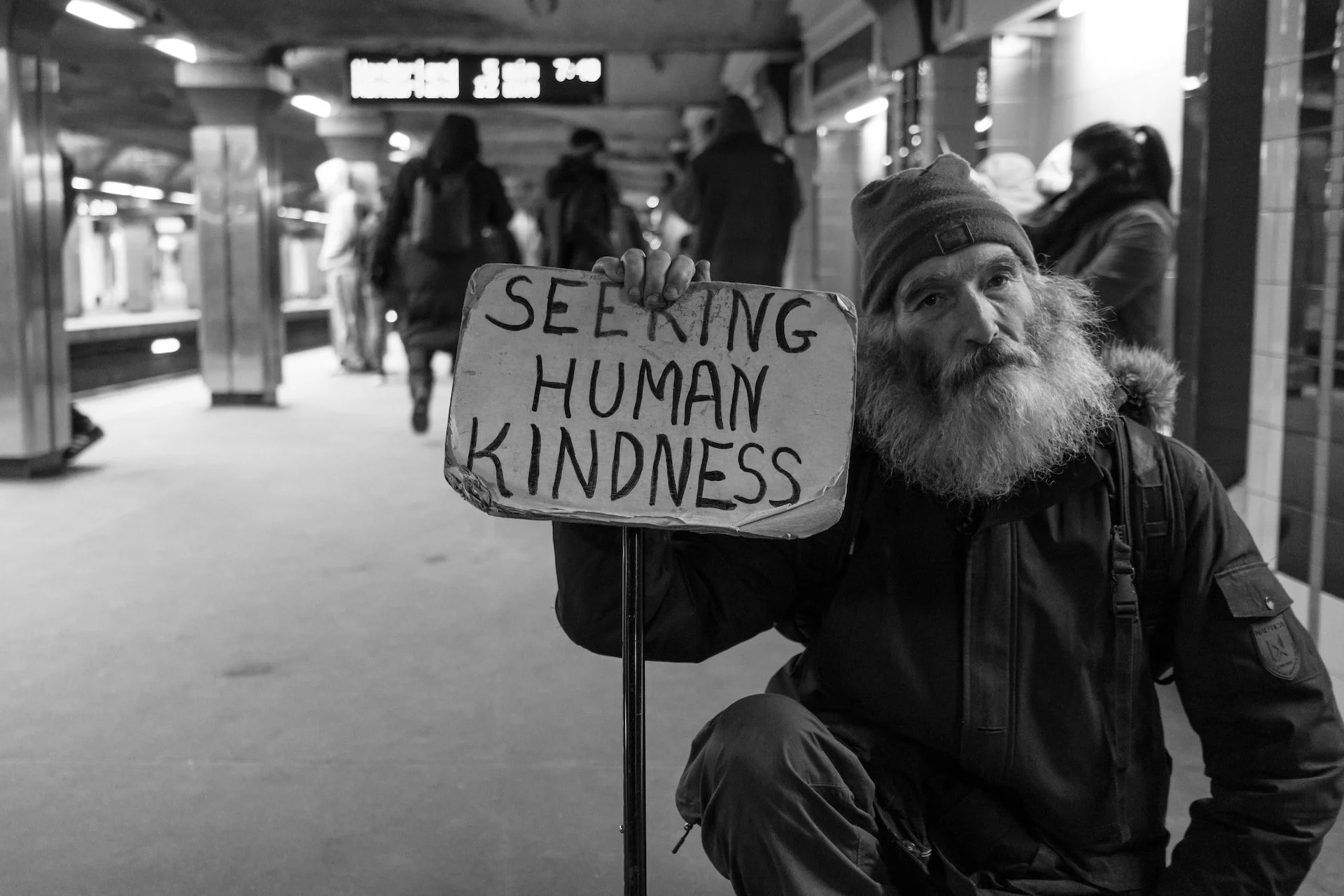
Photo by Matt Collamer on Unsplash
by Catharine Hannay, founder of MindfulTeachers.org
Here are a variety of perspectives on how we benefit from serving others, and how we can serve most effectively.
Note to teachers: I don't necessarily recommend giving this whole long list to your students. I like to provide a lot of options so you can choose what's most appropriate for your particular context.
What Can One Person Do?
“As one wise rabbi reflected, when it is very cold, there are two ways to warm yourself. One is by putting on a fur coat, the other is by lighting a fire. What is the difference? The difference is that the fur coat warms only the person wearing it, while the fire warms anyone who comes close."
Dr. Byron Karasu, The Art of Serenity: The Path to a Joyful Life in the Best and Worst of Times
“There are, of course, in any community, a thousand and one ways to make oneself useful… Charitable organizations and hospitals, poverty and pain—these exist, alas, everywhere. Their needs are enormous. […]
But there are others, less dramatic though no less real. There is loneliness within reach of your outstretched arm; there is unhappiness that requires, perhaps, only understanding and a fortifying word; there is hunger and sickness and despair somewhere in your neighborhood. […]
The needs of the community, of society, are endless, beyond calculation. If you learn to see where they are, you will find, at the same time, a way to be useful.”
Eleanor Roosevelt; You Learn by Living: Eleven Keys for a More Fulfilling Life
“Simple acts of kindness are so meaningful. [...] perhaps you offer a flower from your garden, or just listen to the fears and feelings of someone who is suffering, so they know they are not alone. […] Gandhi said, 'The act that you do may seem insignificant, but it’s important that you do it.'
[...] You have to honor your own path and be able to trust that there is a place in you that knows what is best. […] The Quakers call it the still, small voice within. When it speaks, listen. If, as you listen to your heart’s intuition, it feels right to do something, do it.”
Ram Dass, Polishing the Mirror: How to Live from Your Spiritual Heart
“We can wait for others to make the world a more sane and compassionate place, or we can volunteer. […]
Many people hold back from helping because they wrongly believe that their actions would be inadequate to make the huge changes that are needed. They mistakenly judge what they can do as a failure […]
Ordinary acts of service accumulate.”
Donald Altman, One-Minute Mindfulness
“Give what you have. To someone, it may be better than you dare to think.”
Henry Wadsworth Longfellow, Kavanagh: A Tale
“We always think the thing we need to transform everything – the miracle – is elsewhere, but often it is right there next to us. Sometimes it is us, ourselves.”
Jeanette Winterson, Why Be Happy When You Could Be Normal?
“In a gentle way, you can shake the world.”
Mahatma Gandhi
How We Benefit from Serving Others
"Success must include two things: the development of an individual to his utmost potentiality and a contribution of some kind to one's world. [...] The need to be needed is much stronger in most of us than we are aware. We hear a great deal about the need for self-expression, but, by and large, it rarely brings the same returns in basic satisfaction that come with going beyond the self to meet another person's need."
Eleanor Roosevelt, You Learn by Living: Eleven Keys for a More Fulfilling Life
“This is the paradoxical effect of service: those who do service often get as much benefit as those who are served, or more. Also paradoxically, you can’t go into the performance of the service with the motive of getting personal benefit out of it; you must enter into it purely altruistically. Only then do you reap its profound personal rewards.”
Bill O’Hanlon, Do One Thing Different
“The place God calls you to is the place where your deep gladness and the world’s deep hunger meet.”
Frederick Buechner
How to Help Most Effectively
“I’ve always thought the people who want to help save the world are the worst people to be in charge of a charity.”
Donna Leon, Do Unto Others
“To respect one’s fellow men is perhaps more difficult than to ‘love’ them in a wide, vague sense. In fact, it is possible that to feel respect for mankind is better than to feel love for it. Love can often be misguided and do as much harm as good, but respect can only do good. It assumes that the other person’s stature is as large as one’s own, his rights as reasonable, his needs as important.”
Eleanor Roosevelt; You Learn by Living: Eleven Keys for a More Fulfilling Life
“We have a tendency to rush in, to fix things up with good advice. But we often fail to take the time to diagnose, to really understand the problem first[…]
Suppose you’ve been having trouble with your eyes and you decide to go to an optometrist for help. After briefly listening to your complaint, he takes off his glasses and hands them to you. ‘Put these on,’ he says. ‘I’ve worn this pair of glasses for ten years and they’ve really helped me.’”
Stephen Covey, The Seven Habits of Highly Effective People
“In Buddhist iconography, there is a bodhisattva named Avalokitesvara who has one thousand arms and one thousand hands, and has an eye in the palm of each hand. One thousand hands represent action, and the eye in each hand represents understanding. When you understand a situation or a person, any action you do will help and will not cause more suffering. When you have an eye in your hand, you will know how to practice true nonviolence.”
Thich Nhat Hanh, "The First Precept: Reverence for Life"
"There is a famous Zen story about a teacher who was asked about the highest teaching of Zen. He wrote the word ‘Attention’ on a blackboard. But isn’t there anything else, he was asked. Yes, there is, he said, and he wrote the word ‘Attention’ again. But there must be something else, insisted the student. Yes, there is, the teacher said. And he turned to the board and once more wrote ‘Attention.’ Now the board said, ‘Attention. Attention. Attention.’
That story describes the attitude of mind necessary for Zen study. It also describes the attitude needed to care for homeless kids. […] The insight and equanimity that can come from spiritual practice should open our eyes to the problems of people around us and make us more effective."
Bernard Glassman and Rick Fields, Instructions to the Cook: A Zen Master’s Lessons on Living a Life That Matters
“To want to rush headlong into working for the good of others, without getting prepared first, is like wanting to carry out a medical operation immediately in the street, without taking the time to learn medicine and build hospitals. Of course the years of study and the countless tasks required to build a hospital do not heal anyone, but once they are complete, they allow us to care for the sick infinitely more efficiently.
The first thing to do if you want to help others, therefore, is to develop your own compassion, altruistic love, and courage enough to be able to serve these others. […] Every practitioner must first transform himself before he is able to serve others effectively.”
Matthieu Ricard, Altruism: The Power of Compassion to Change Yourself and the World
“Our lives become most meaningful when we combine our own desires with an active strategy to help other people at the same time. […] The two most important questions in the universe:
What do you really want to get out of life?
How can you help others in a way that no one else can? [...]
Start thinking seriously about how you will really change the world:
What needs can you meet?
Who looks to you as a leader?
What bothers you about the world?
How can you make things better?
What can you offer the world that no one else can?”
Chris Guillebeau, The Art of Non-Conformity: Set Your Own Rules, Live the Life You Want, and Change the World
Questions for Reflection and Discussion
(If you use these questions in a class or group: As with any other discussion about personal topics, please respect your students' wishes about how much they choose to share.)
What connection (if any) do you see between mindfulness and service?
What would you say to someone who feels overwhelmed by all the problems in the world?
Have you ever tried to help, but the situation didn’t turn out as you expected? What happened?
Which ‘helpers’ do you most admire? Why?
Have you ever been in the position of receiving assistance from an individual or organization? How were you treated? How did you feel?
Do you think it’s easier to be a ‘helper’ or a ‘helpee’? Why?
Related Posts
There are many more resources here at MindfulTeachers.org on compassion and on serving our communities, including the following posts: