Is It Time to Retire? Finding a Meaningful Life After Ending a Teaching Career
published February 17, 2022
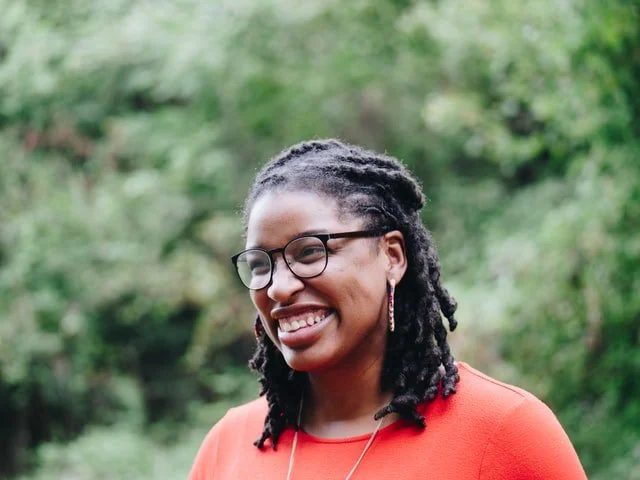
Photo by Eye for Ebony on Unsplash
by Ira Rabois, author of Compassionate Critical Thinking
I can’t imagine a more complex and challenging time to think of retiring than today. When I retired from teaching, I felt I was doing what people had done forever. I was 65 and had reached an age where change and slowing down was needed. But now, as I try to empathically feel what a teacher might be experiencing as they contemplate retirement, I’m filled with such contradictory feelings.
We might be retiring because we’re exhausted. Our job, our whole profession has been attacked for years. We might feel unsafe due to the pandemic and the inadequate response by our school district to that pandemic. We might be retiring because we’re sick of hearing from people, possibly parents, who don’t want their children to be educated in history, particularly the history of racism in the U. S., or about global warming, democracy or whatever.
And maybe, it is just that time. We’ve experienced a challenging era and survived; hopefully, we feel fulfilled, that we’ve helped so many people. And it’s just time to move on to another phase of our lives.
But what troubles many of us is what will we do with ourselves once we no longer have such a busy life? I noticed this fear myself, but it turned out to be mostly a fear of the unknown speaking. Every retiree I know has told me finding something positive to do was not a problem.
Yet, it’s best if we retire to something not from something. As teachers, we are people with a calling to help others. This doesn’t end when the job ends, although taking care of ourselves can now come first. Be sure to keep in touch with other retired teachers, for emotional and intellectual support and for practical concerns. Once retired, we are no longer in a union. In my area, we formed an association to protect our health insurance.
Steps to Take:
Since the world has been so tough lately, one of the first things we can do is heal. We can sit quietly and mindfully focus on our breath, or feet on the floor, or some comfortable object of attention. We can visualize the good we have done and allow ourselves to let go of the worry and tension. It’s too easy to think of the difficult, so we must aid ourselves in thinking of the kindness we’ve expressed and done.
Take a calming breath and then picture⎼
A child that we spoke to with care and compassion when no one else was there to do it.
A topic we helped a student understand when they were having difficulty doing so or a creative way we developed to teach a topic.
A time (before COVID) when we held someone’s hand when they were walking through a tunnel of fear or a moment when we helped someone face what they couldn’t face alone.
How can we, when we retire and have less constant stress and time pressure, continue to serve the world?
We have hopefully 20-plus years of life left. How do we want to live it?
Questions to Consider Helping Us Re-Conceptualize Retirement:
Huston Smith, in his classic book The World’s Religions, describes two stages of life in traditional forms of Hinduism beyond work, beyond what he calls the “householder stage.” There is the retiree stage and then the sannyasin. He says not everyone reaches either of them.
The retirement stage is where someone turns inwards to answer life’s deepest questions. They leave home, even their spouse and family, and become a “forest dweller” or a wanderer. They give up all ties and live with “nothing” between them and reality. Their life is driven by questions: What makes life worthwhile? Is old age worthwhile? Is self-understanding truly important? What is the secret of ‘I’? Retirement can be a time of transcending the five senses “to dwell in the reality which underlies the natural world.”
And then, according to the Bhagavad Gita, one of the sacred books of India, comes the sannyasin stage, where they become “one who neither hates nor loves.” A sannyasin has found self-realization and can return to the world because everywhere is home, everything is enlightening.
I remember a discussion that was repeated several times and in different ways with my students. The question was “would we rather live with a comfortable illusion or a discomforting truth?” Or⎼ “Is it right to bury our head in the sand in order to not be overwhelmed by fear or suffering?” It’s a false dichotomy but reveals real questions. Why should we live with no illusions between “reality” and me? Should our life be guided by what’s comfortable? How honest can we be with ourselves?
I have no desire to leave home, or leave my wife, or cats. But maybe, in some sense, I have still made these questions a central part of my life.
I retired when I did partly because I wanted to answer these and other questions before I died. When I was working, my time and work felt valuable not only because of the relationships I had with staff and students but because other people valued what I did and paid me for it.
Wasn’t it time to care enough about life that I no longer needed to be paid to live it?
Can I give each moment the same value I once gave to work?
Can I open enough to the world, to others, and value them, feel them, so deeply that I gain security not in material things and other’s opinion of me, but in a sense of what’s right, what “fits the situation,” what is?
Can retirement and aging become our practice? Can I think of what’s left of my life as an opportunity to learn each moment, to find meaning in living itself, so death becomes less frightening because living is so real?
All of society could benefit from re-conceptualizing retirement, not as a reward for years of hard work, but as important in-itself. We need times in life dedicated to questioning. We need to value elders who teach us about life and aging. We will (hopefully) all retire and get old. If we bury our heads in the sands of youth and not think positively of elders, we will fear aging and thus our lives. We will treat the elderly with disrespect and have years of disrespect waiting for us. How we think of elders is very much how we think about life itself.
My grandfather told me that he regretted nothing. He had lived a full life. Only by valuing the moments of life can we say this. This is one reason not to bury our heads in the sand in the face of discomfort or the face of others suffering. As teachers we clearly know such burials are expensive. We pay a price for hiding. The world pays a price for hiding. We all are poorer for it. Maybe learning how to be rich in this way is what retirement is for.
About the Author

Ira Rabois has many years of experience as a secondary school teacher, instructor in the traditional Japanese martial arts, and meditation practitioner.
While teaching for 27 years at the Lehman Alternative School in Ithaca, N. Y., he developed an innovative curriculum in English, Philosophy, History, Drama, Martial Arts, and Psychology, and refined a method of mindful questioning. He writes a blog on education and mindfulness. Ira is the author of Compassionate Critical Thinking: How Mindfulness, Creativity, Empathy, and Socratic Questioning Can Transform Teaching.
Related Posts
There are many more resources here at MindfulTeachers.org on mindfulness in schools and self-care for teachers, including the following posts: