A Dozen Quotations About Mindfulness and Creativity
published May 29, 2026
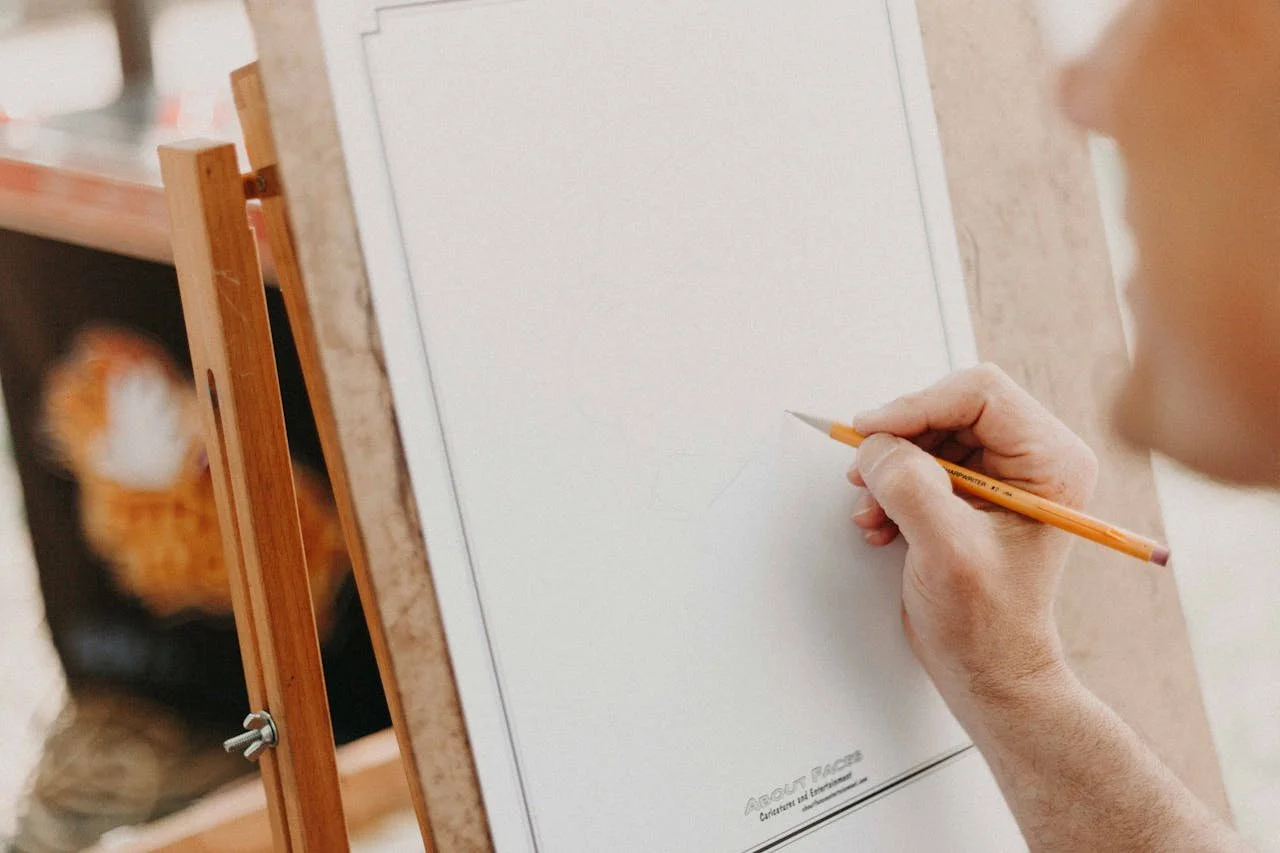
photo by Julia Avamotive from pexels.com
by Catharine Hannay, founder of MindfulTeachers.org
Continuing the series of quotations about mindfulness, here are a variety of perspectives on paying attention, unplugging from devices, and looking at the world from new angles.
Paying Attention
1. “Self-forgetful concentration is what happens in the artistic process—an absorption in the moment, a pouring of the self into the now.
We are, as [Emily] Dickinson says, ‘Without the date, like Consciousness or Immortality.’
That is what artistic work and child’s play have in common: both, at their fullest, are experiences of being lost in the present, entirely occupied.”
Mark Doty, The Art of Description: World Into Word, p. 23
2. “René Magritte said his goal was ‘to breathe new life into the way we look at the ordinary things around us.’
This is exactly what an artist does: By paying extra attention to their world, they teach us to pay more attention to ours.”
Austin Kleon, Keep Going: 10 Ways to Stay Creative in Good Times and Bad, p. 105
3. “What the Japanese call shokunin katagi, the artisanal spirit, is about much more than skill. […]
It invests the simplest daily acts with artistry, whether it be making tea, raking Shirakawa gravel in a garden or curating that work of art and lunch that is a bento box.
The point of life is to infuse the quotidian with the pleasure of creation.”
Joe Moran, First You Write a Sentence, p. 16-17
Unplugging
4. “The phone gives us a lot but it takes away three key elements of discovery: loneliness, uncertainty, and boredom. Those have always been where creative ideas come from.”
Lynda Barry, quoted in Keep Going by Austin Kleon, p. 50
5. “The internet may be able to keep on giving us more and more ‘stuff’ ad infinitum, but our brains don’t function like that. Our brains function in a much slower way, and connecting to our creative side involves inhabiting time in a capacity that is at odds with our standard perception of how we think it flows.”
Philippa Stanton, Conscious Creativity: Look, Connect, Create, p. 25
6. “You must be connected to others in order to be inspired and share your work—but […] you must retreat from the world long enough to think, practice your art, and bring forth something worth sharing with others. […]
Silence and solitude are crucial. Our modern world of push notifications, 24/7 news cycles, and constant contact is almost completely inhospitable to any kind of retreat artists must make in order to focus deeply on their work.”
Austin Kleon, Keep Going, p. 39
7. “Unlike in the twenty-first century, where even the machines are made by other machines, everything in the sixteenth century was handmade. Every pot, goblet, chess piece, fork, or shoe was unique. It was said that sailors could recognize their home ports by the distinct tones of the bells ringing in the church tower.”
Louis Sachar, The Magician of Tiger Castle, p. 22
Shifting Focus
8. “Just get up and turn around. From wherever you are, I want you to stand up and face the other direction. Amazing thoughts and breakthroughs can slip into your brain when you are willing, quite literally, to change your perspective.”
Sam Bennett, Get It Done: From Procrastination to Creative Genius in 15 minutes a day
9. “Creativity is piercing the mundane to find the marvelous.”
Bill Moyers, Creativity (I’ve seen this quote several times attributed to Bill Moyers but without a specific source; the most likely source is his TV series on creativity.)
10. “To be an artist is to risk admitting that much of what is money, property, and prestige strikes you as just a little silly.”
Julia Cameron, The Artist’s Way: A Spiritual Path to Higher Creativity, p. 181
11. “It is really useful to embrace or at least consider the Japanese concept of wabi sabi. Very simply, wabi implies a rustic simplicity—a quietness, freshness, and irregularity—and sabi is about the beauty and grace that only become visible with age.
Wabi sabi is a way of viewing the world that accepts the impermanence and imperfections of our surroundings and existence. […]
We are bombarded with images of beauty and perfection, but it is the images of real life and subtle imperfection that will always resonate with us more deeply.”
Phillipa Stanton, Conscious Creativity, p. 62
12. “We are cups constantly and quietly being filled. The trick is, knowing how to tip ourselves over and let the beautiful stuff out.”
Ray Bradbury, Zen in the Art of Writing
Questions for Reflection and Discussion
Here are a few possible questions you might want to use as prompts for reflective writing or discussion.
Which is your most/least favorite quotation? Why?
Which quotation is most/least similar to your own perspective? Why?
What can artists learn from mindfulness practice?
What can mindfulness practitioners learn from artists?
Do you think children are generally more creative than adults? Why or why not?
Do you think using the internet helps you to be more creative? Why or why not?
How does the concept of ‘beginner’s mind’ apply to mindfulness and creativity?
Related Posts
There are many more quotations and other resources here at MindfulTeachers.org on the five senses and mindfulness in the arts, including the following posts: