Multicultural Considerations in Teaching Mindfulness: Q+A with Dr. Amoneeta
published November 2, 2022

Amoneeta, PhD, is a psychology professor at Fort Lewis College in Colorado and a clinical supervisor in the counseling psychology program at Assumption University Thailand. Dr. Amoneeta often integrates mindfulness into his teaching, therapy, and service.
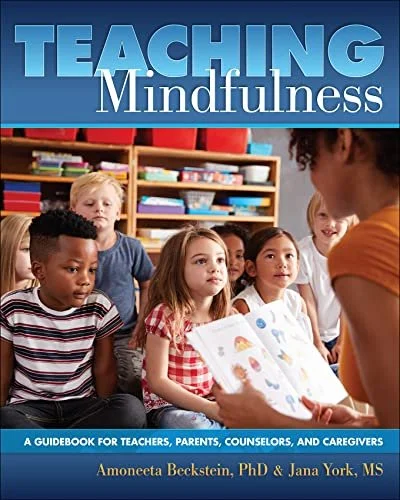
Dr. Amoneeta is particularly interested in how mindfulness can contribute to people’s happiness and inner peace and to society’s growth, resilience, and life enhancement. He is the author of Teaching Mindfulness: A Guidebook for Teachers, Parents, Counselors, and Caregivers.
In this Q+A with Catharine Hannay, founder of MindfulTeachers.org, Dr. Amoneeta discusses his work with Indigenous and other marginalized communities.
Catharine: Your mother is Jewish Israeli and your father is a member of the Anigilohi clan of the Aniyunwiya (Cherokee) tribe. Were you raised with any Aniyunwiya and/or Jewish traditions that connect to mindfulness?
Amoneeta: Growing up, agidoda (my dad) would often emphasize focusing on the present moment when talking about our traditions and practices. While engaged in traditional dance, song, ceremony, or horseback riding, my mind would focus on the task rather than wander into the past or future.
Ema sheli (my mom) also taught us about observing Shabbat, which is basically 24 hours of mindful practice (at least how I see it, it is a contemplative day of just being rather than doing).
To me, prayer, whether from my Aniyunwiya or Jewish practices, can also be a mindful experience. This may be a stretch, but in Jewish tradition we are taught to pray with kavanah, which is a kind of focused absorption that feels very much like mindfulness to me.
Catharine: Here in the U.S., some Christian parents are concerned that secular mindfulness and yoga programs might reflect Buddhist and Hindu religious practices. How is it different teaching mindfulness in Thailand, where 95% of the population identifies as Buddhist?
Amoneeta: Before answering your question, that reminds me. After our book was published, at a recent conference I was exposed to the perspective that profiting from teaching secular mindfulness in the West (pretty much describing our book) is a form of cultural appropriation that strays from the original intentions of mindfulness. I was a bit shocked that I had not considered this perspective, especially given my own identity of coming from an often-appropriated culture. I am still unsure what to think or do about this, but I would like to learn more about it and address this oversight.
Now, on to your question. First, practicing mindfulness in the ways it was originally intended does have some Eastern philosophical origins and likely can reap greater benefits than the more secular practice. However, the way our book teaches it is intentionally completely secular for several reasons:
1) The average person is usually not willing to dedicate the time and commitment to the more spiritual practice.
2) Even the basic, non-spiritual practice of mindfulness can reap mental, physical, social, and even societal benefits.
3) If the spiritual aspect were brought in, it would not be accepted in many schools.
Our hope is that more kids and even society can reap the benefits of secular mindfulness, and maybe a handful will become more open to pursuing the more spiritual practice one day.
Next, the biggest difference I noticed teaching mindfulness in Thailand is that the majority of the Asians I worked with there (e.g., Thai, Chinese, Bhutanese, Nepalese, Japanese, Myanmarese) had already been exposed to some form of mindfulness or meditation practice. This exposure was often early on during their grade school days. In the U.S., I might have to start with the very basics such as teaching deep breathing.
Catharine: You recently conducted a study on Native American subjective happiness, self-construal, and decision-making. In your opinion, how does mindfulness connect to happiness, and how might this differ for Indigenous and non-Indigenous populations?
Amoneeta: I believe mindfulness can certainly contribute to happiness. Two major detractions from happiness can be dwelling on the past (often contributing to depressive symptoms) and worry about the future (often contributing to anxiety symptoms). Mindfulness teaches us to be here now, in this present moment, making it hard to be anxious and depressed. It also teaches us to not judge those thoughts and feelings that contribute to discomfort. Being fully present in the moment while engrossed in an activity can contribute to flow-like states, which can boost happiness.
Very generally speaking, many traditional Native American cultures tend to be more present-oriented when compared to modern Western culture which tends to be future-oriented. Traditional Native happiness is likely to be more derived from an interconnectedness with community and a sacred connection and harmony with all beings, including Mother Nature.
Blume (2020), in his book A New Psychology Based on Community, Equality, and Care of the Earth, states:
“Spirituality is mindful of the sacredness of all things and therefore mindful of the inherent value in all things that sacredness creates… When Indigenous people are being mindful, they see both the trees and the forests simultaneously and are keenly in touch with their inherent value” (p. 7).
Native American spirituality, mindfulness, and happiness likely go hand-in-hand. Whereas in our more modern colonized world, happiness is often inwardly/individually focused and associated with materialistic acquisition. Of course, regardless of what culture someone comes from, we often end up learning that pursuing individualistic and materialistic goals leads to a hedonic treadmill that that does not end in happiness.
Catharine: You’re a social justice advocate and work toward mental wellness in marginalized communities. In your opinion, what’s the connection (if any) between mindfulness and social justice, and how can mindfulness teachers support marginalized communities?
Amoneeta: Teaching and practicing mindfulness could be acts of social justice in many ways, but I’ll mention just a few. The discrimination and microaggressions that minoritized communities often experience likely contribute to stress and anxiety in their daily lives. Imagine that you have to constantly be on the lookout for possible threats. This can get the sympathetic nervous system ramped up which can have adverse long-term mental and physical health consequences.
A minoritized person needs to distinguish between a truly life-threatening event (that requires a fight, flight, or freeze reaction) and other stressful but non-life-threatening events, such as discrimination. In the second case, while still psychologically damaging, mindfulness can help the person engage the parasympathetic nervous system to help decrease the potential consequences of being frequently activated.
In addition, majority community members might also benefit from mindfulness. Mindfulness might help increase their awareness of the microaggressions they engage in and decrease those while they also practice being mindfully non-judgmental.
Catharine: What does your current mindfulness practice look like, and how does it help you with your work as a professor and counseling psychologist?
Amoneeta: Mostly, mindfulness is integrated into my day (although I will admit there are many days when I forget to be mindful). I like to start each day by mindfully focusing on making my bed.
Taking a page out of our book, the Little Green Dots idea has helped me the most. I have little green stickers on my water bottle, my car’s steering wheel, the back of my phone, and several other places. When I happen to notice them, these serve as a reminder to take a quick mindfulness break by taking a few breaths and checking in with myself in that moment.
Other times, when I notice myself becoming uncomfortably emotional—if I catch it in time—I can often focus on my breathing and maybe close my eyes and visualize my happy place. Then I can nonjudgmentally observe what I feel and use that as an informational guide.
Mindfulness certainly helps me be a better therapist and professor. In both roles, I need extreme concentration and to be fully present. I face challenges and experience intense circumstances almost daily. Without non-judgmentally paying attention in the present moment (as Jon Kabat-Zinn defines mindfulness), I doubt I would be able to cope with everything that is thrown at me in a competent and effective way.
For a FREE preview, click here:
Teaching Mindfulness: A Guidebook for Teachers, Parents, Counselors, and Caregivers by Amoneeta Beckstein, PhD and Jana York, MS
Related Posts
There are many more resources here at MindfulTeachers.org on the diverse approaches to mindfulness, including the following posts: