Diversity, Discrimination, and Allyship: Quotations for Reflection and Discussion
published October 14, 2023
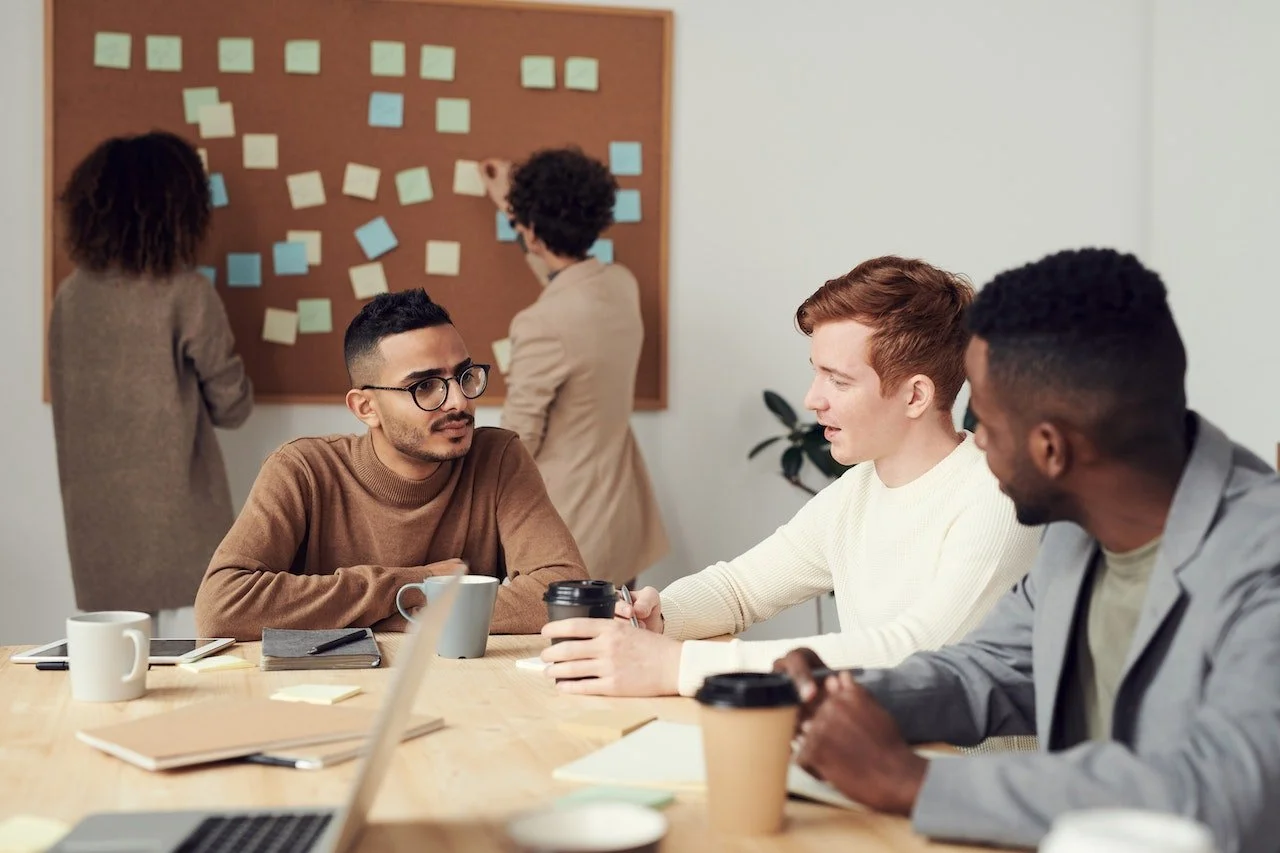
photo by fauxels from pexels.com
by Catharine Hannay, founder of MindfulTeachers.org
Here are a variety of perspectives on privilege, discrimination, allyship, and connecting across difference.
Teachers, I don't necessarily recommend giving this whole long list to your students. I like to provide a lot of options so you can choose what's most appropriate for your particular context.
Quotations About Privilege and Discrimination
“Like most of the wealthy, he had only the dimmest notion of what money represented to the poor.”
Edith Wharton, The Glimpses of the Moon
“They don’t know what it’s like when you come from a family that didn’t have a father there to guide you in the right path. They don’t know what it’s like when there is nothing to eat when you come home from school. They don’t know how it feels when your mother tells you that you need to quit school to get a job, because there ain’t enough money for food.”
Victor (an incarcerated youth), quoted in True Notebooks, p. 290
“The assumption [was] that those of us who found ourselves floundering in life needed only to pull ourselves together, forgetting that they’d been born in the lifeboat while some of us had been dropped into the fathomless depths without so much as a rope to grab hold of.”
Louise Hare, Miss Aldridge Regrets, p. 216
“Much of what extremely short-statured people cannot do is determined less by social attitudes than by physical arrangements made by the majority of human beings to suit taller people.”
Andrew Solomon, Far from the Tree, p. 125-126
Lin Chung: “If a Chinese wants to live in a foreign country he has to be twice as clever as the inhabitants and make perfectly sure that they never suspect it.”
Phryne Fisher: “Not a new idea. Women have been doing that for a thousand years.”
Kerry Greenwood, Ruddy Gore: A Phryne Fisher Mystery
“‘Joe’ could get promoted as a software developer with no degree, ‘José’ would need at least a master’s degree to get the same position. Meanwhile, female software engineers need a master’s degree to compete with men who have BAs.”
Olga Khazan, Weird: The Power of Being an Outside in an Insider World, p. 205
“Just knowing your rights (or your worth or value) will never be enough if you are powerless to force someone else to respect them.”
Britney Wilson, in Disability Visibility: First-Person Stories from the Twenty-First Century, p. 217
Quotations About Allyship
“It is completely understandable that we do not know what it is like to live with a different color skin or gender or different physical abilities or any of the myriad of differences that exist among humans. So there’s no need to feel bad about what we don’t know. The point is to educate ourselves, to take an active role in correcting our blind spots.”
Ash Beckham, Step Up: How to Live with Courage and Become an Everyday Leader, p.37
"Aspiring to allyship requires many of the qualities we cultivate in meditation: humility, deep listening, empathy, courage, radical self-reflection and honesty, a willingness to let go and take risks."
Oren Jay Sofer “How I Continue to Mess Up Being an Ally (And How Meditation Helps Me Mess Up Slightly Less)”
Quotations About Individual and Group Identity
“Infinite nuances are needed if justice is to be done to individual human beings.”
Carl Jung
“Humans don’t tend to do well with differences. We learn to hate a difference, glorify a difference, exaggerate a difference, deny, minimize, or eradicate a difference. We may engage in nonproductive efforts to change, fix, or shape up the person who isn’t doing or seeing things our way. In the history of nations, families, or couples, folks find it hard to discuss their differences in a mature and thoughtful way.”
Harriet Lerner, The Dance of Connection, p. 91-92
“Cultural similarity is so important to the acceptance of immigrants that Swiss authorities once ran an ad campaign featuring an African immigrant arriving to work on time each day, as if to emphasize that Africans can be just like the timely Swiss.”
Olga Khazan, Weird: The Power of Being an Outsider in an Insider World p. 86
“‘English, Irish, Scottish. You all look the same.’ […]
I bet the rabbi could have listed twenty differences between a Latvian and an Estonian Jew.”
Will Thomas, Some Danger Involved, p. 66
“However we have been taught to think of ourselves in terms of race, whatever the labels we find ourselves using or that have been applied to us, the actual truth of our heritage is, without question, vastly more complicated than most of us can even fathom.”
Rhonda Magee, The Inner Work of Racial Justice, p. 308
“There are countless aspects to a self: race and sexual orientation are only two of them; it seems to me, neither the least nor the most important. It’s more accurate to say there’s a constant shifting hierarchy, depending on any given moment in experience. Am I a gay Black man when roasting a chicken at home for friends? Sure. But that’s not what I’m most conscious of at the time.”
Carl Phillips, My Trade is Mystery
“We all have race bias. [...] We look at people and we notice if they look like us or are different from us and then we start to treat the people that look like us better. It is a huge weakness of human beings.”
Janet Smylie (Cree/Métis), from #NotYourPrincess: Voices of Native American Women, p. 93
Making Assumptions About Each Other
“Our parents and siblings, our religious and political leaders, the books we read, the television shows and YouTube videos we watch, are all filled with assumptions that enter our belief systems as we grow. We can’t see the assumptions for the same reason we can’t see our own eyes: they aren’t just thoughts, they’re the way we think.”
Martha Beck, The Way of Integrity, p. 109
“We can tell quite a lot about what Susan will experience just by the fact that she is human. We can tell even more by knowing she is an American girl, living in a certain specific community, with parents of such-and-such an occupation. But after everything is said and done, knowing all the external parameters will not allow us to predict what Susan’s life will be like. Not only because random chance might throw all bets off, but more importantly, because Susan has a mind of her own.”
Mihaly Csikszentmihalyi, Finding Flow, p. 7
“The first thing I am is a person. [...] But people either relate to you as an Indian or as a woman. They relate to you as a category. A lot of people don’t realize that I am not that different from anyone else.”
Winona LaDuke (Anishinaabe/Ojibwe), #Not Your Princess: Voices of Native American Women, p. 32
“When outsiders tell our stories, their distorted representations come to be accepted as fact.”
Simran Jeet Singh, The Light We Give: How Sikh Wisdom Can Transform Your Life, p. 58
Connection and Understanding
“Stranger! if you, passing, meet me, and desire to speak to me, why should you not speak to me? And why should I not speak to you?”
Walt Whitman
“Could a greater miracle take place than for us to look through each other’s eyes for an instant?”
Henry David Thoreau
“It is not necessary that we change any of our beliefs. It is necessary that we examine them.”
Julia Cameron, The Artist’s Way, p. 51
“Making the effort to hear someone else’s viewpoint might not change our minds, but it can more fully inform our own judgment and help us better understand one another.”
James E. Ryan, “The One Question You Should Ask Yourself,” Oprah Magazine, January 2018
Questions for Reflection and Discussion
If you choose to use these questions in a class or group: As with any other lesson that might bring up painful or embarrassing experiences, please respect your students' wishes about how much they choose to share.
Which of these quotations resonates the mostwith/for you? why?
Do you disagree with any of these quotes? Why?
When you were growing up, what did you learn about different groups of people from your family and from the media? Has your perspective changed since then?
Do you belong to a group that is often portrayed in a negative or inaccurate way? What would you like others to know about this group?
Do other people often categorize you in a group you don’t really identify with? How do you feel about this?
Do you belong to a group that is privileged in certain ways? How do you feel about this? How can members of your group help members of groups that don’t share in this privilege?
Have you ever made a false assumption about a member of another group? What happened? How did you feel?
Related Posts
There are many more quotations and resources on diversity and building supportive communities here at MindfulTeachers.org, including the following posts: