Identity, Diversity, and Understanding: Quotations for Reflection and Discussion
January 24, 2025
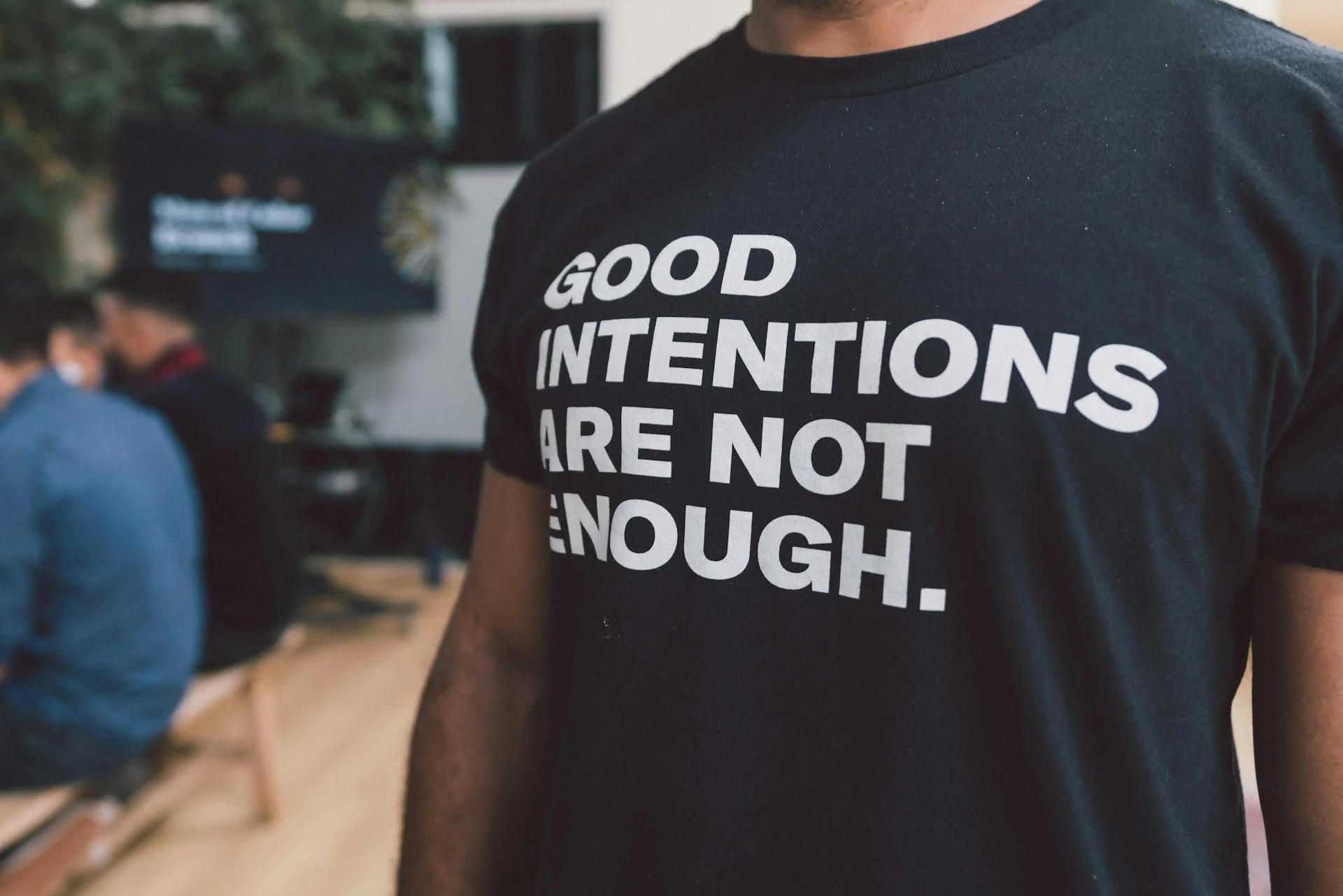
photo by Edgar Chaparro from Unsplash
by Catharine Hannay, founder of MindfulTeachers.org
Continuing the series of Quotations for Teaching Mindfulness and Compassion, here are a variety of perspectives on how we view ourselves and others, and how to effectively support members of other groups.
Teachers, please note:
I don’t necessarily recommend giving this whole list to your students—I like to provide a lot of options so you can choose what’s most appropriate for your particular context.
I’ve included links to book titles so you can see more information about the sources of these quotes. (I don’t accept any paid links or advertising.)
Scroll to the bottom of the post for questions that can be used for personal reflection or as prompts for discussion and writing.
Who Determines Someone’s Identity?
“If someone showed you my picture on the street, how would you describe it?
You might say, an Asian fellow. Asian dude. Asian man.
How many of you would say: That’s an American?
What is it about an Asian man that makes him so hard to assimilate?
Who gets to be an American? What does an American look like? […]
After two centuries here, why are we still not American? Why do we keep falling out of the story?”
Charles Yu, Interior Chinatown, p. 250-251
“When writing about Indigenous communities within a specific region, state, or country, it is imperative that we showcase how distinct and diverse they are from each other and do not mesh, meld, or reduce their vastly different experiences as Indigenous peoples into a singular experience or identity.”
Alex Temblador, Writing an Identity Not Your Own
“A man was talking to a grasshopper.
The man said, ‘You know, they have a drink named after you.’
And the grasshopper said, ‘You mean they have a drink named Howard?’”
Daniel Wallace, Big Fish, p. 167
Unconscious Bias/
How We View Other Groups
“There is racism in the queer community, homophobia in many communities of color, and ableism across many groups. No one is free of biases.”
Alex Temblador, Writing an Identity Not Your Own, p. 49
“It’s all too easy to be ghettoized with people your own age, agreeing on things like snow was colder in our day, roads longer. We’re as tribal about age as we are about class, race, and political persuasion. It’s a cycle that needs to be broken.”
Twyla Tharp, Keep It Moving, p. 175
[While this was clearly not the author’s intent, many people find the terms ‘ghetto’ and ‘tribal’ to be offensive. I’ve included this issue in the Questions for Reflection and Discussion at the end of the post.]
“An experimental psychologist in the US asked a group of people to view various Chinese characters that were displayed on a screen. The volunteers were then asked to return a few days later […] to say which ones they recognized from the previous session. […] People had absolutely no clue […]
Then the psychologists repeated the experiment […] The volunteers were not asked to identify the characters they had seen the week before. They were simply asked to say which ones they liked best. […]
The ones they liked were the ones they’d seen before.
[…] Their unconscious recognized the Chinese characters from the preview week, but instead of prompting the volunteers to say, ‘Yes, we saw them last week,’ it simply generated a feeling of liking.”
John Cleese, Creativity: A Short and Cheerful Guide, p. 25-28
Supporting Members of Other Groups
“Please do not tokenize students or call them out in front of everyone. I can’t tell you how many times teachers called unwanted attention to my disability in unnecessary ways […] like ‘Everyone stand up, but you don’t have to, Emily.’
Everyone knew I use a wheelchair and it was obvious I couldn’t stand up, so why point it out? The best bet is to plan ahead to make an activity work for all of your students so it will run smoothly and you’ll avoid encountering accessibility obstacles.”
Emily Ladau, 'What I Want Future Teachers to Know About Students with Disabilities'
“Allyship is not a contest, but […] I’ve noticed a lot of language on social media treating it as such. I often see people fighting these systems of oppression—misogyny, patriarchy, racism, homophobia—by using the very methods of those systems—shame, judgment, overconfidence, superiority, power.
Perhaps in our steadfast fighting against a system that makes people feel small, it’s better if we embrace a bit more understanding, empathy, and open-mindedness toward each other. And if we can make empathy a normal part of our everyday lives, maybe that’s a way of fighting the system in and of itself.”
Kristin Wong, How to Make Allyship an Active Part of Your Everyday Life at Puttylike.com
“Some […] allies don’t know enough about the relevant issues. […] In truth, nearly every ally could benefit from being a little less self-assured and a little more curious. […]
Some situations call for allies to step up while others call for them to step back. […] The Platinum Rule enhances the Golden Rule by urging you to help others as they would wish to be helped. It reminds you to take the other’s person’s preference seriously, whether by asking directly or by carefully reflecting on their needs.”
Kenji Yoshino and David Glasgow, Say the Right Thing: How to Talk About Identity, Diversity, and Justice, p. 63; p. 131-2
[In the novel Rough Pages, Andy steps in when his boyfriend is dealing with a man who’s making racist assumptions about Filipinos’ ability to speak English and do their jobs competently.]
Lee: “If he thinks there’s always going to be someone around, a white man, then…”
Andy: “Then he’s never going to take you seriously until I show up. I’m sorry […] I just wanted to help [but…] You took care of it all by yourself.”
Lee: “I’m the hero of my story. Not just someone who needs rescuing in yours. So next time I say I can handle something, let me handle it, okay?”
Andy: “Okay. But if you do need help, you’ll ask, right?” […]
Lee: “I promise to ask for your help when I need it or want it.”
Lev AC Rosen, Rough Pages, p. 169-70
[Walei Sabry, a blind disability rights activist, was walking to the train station with a classmate who’s also blind.]
“All of a sudden, out of nowhere, two strangers […] each grabbed one of us. I started to ask the man who grabbed me to let me go, telling him that we were fine. They insisted on helping and there was a back and forth for a few minutes. […] ‘I don’t understand. We were just trying to help you.’ To which I replied, ‘We didn’t ask for your help!’ They finally got the point, but […] as the man walked away he yelled, ‘You two are the worst blind people in New York!”
quoted in Demystifying Disability by Emily Ladau, p. 103
How to Correct Others
“Telling someone that what they did was hurtful or not thoughtful is not the same as shaming them. That’s simply holding that person accountable. […] And it is certainly possible to hold someone accountable while staying rooted in values of kindness and compassion.”
Brené Brown, quoted in The Lightmaker’s Manifesto by Karen Walrond, p. 82
“We have to create space in the culture for people who are imperfect. We can’t just have a ‘gotcha’ culture. The goal is to take people who are imperfect and make them into allies, not enemies.”
Greg Walton, quoted in Supercommunicators by Charles Duhigg, p. 291
“Think of a time when you were an ally. Think of a time when you were the affected person. And finally, think of a time when you were the source […] of non-inclusive behavior. […] If you look at the world assuming you’ll sometimes be the source, you’ll have a fundamentally different take on how sources should be treated.
If you believe a mistake will turned you into a bad person, you’ll try to justify your behavior. Yet if you know you can retain your integrity while admitting to errors, your guard will come down. You’ll be more likely to say: ‘You’re right. I screwed up and I’m sorry. Thanks for letting me know.’”
Kenji Yoshino and David Glasgow, Say the Right Thing: How to Talk About Identity, Diversity, and Justice, p. 154; p. 177
“Seek allies, however imperfect, in preference to making enemies.”
Alan Jacobs, How to Think: A Survival Guide for a World at Odds, p. 70
Questions for Reflection and Discussion
As with any sensitive topics, please respect your students’/clients’/trainees’ decisions about how much they feel comfortable sharing with you or with the group.
What are some differences between how people tend to identify you and how you prefer to identify yourself?
Many popular expressions (like using ‘tribal’ in a non-Native context) are now considered offensive. What do you think is the best way to correct an older adult who’s using out-of-date language?
Has someone ever corrected you for saying something you didn’t realize was offensive? What happened? Did you appreciate the way they spoke to you, or do you wish they’d handled the situation differently?
What do you think makes a good ally? (And do you like the term ‘ally’?)
Have you had a particularly good or bad experience communicating with someone whose background is quite different from your own? What happened?
What would you like other people to know about a community you identify with? In what ways do you identify as a member of this community, and in what ways do you identify as an individual and/or as a member of multiple communities?
Related Posts
There are many more quotations and other resources here at MindfulTeachers.org on diversity, community, empathy & compassion, and mindful speech, including the following posts: