

Grief, Trauma, Compassion, and Resilience: Quotations for Reflection and Discussion
published December 26, 2024
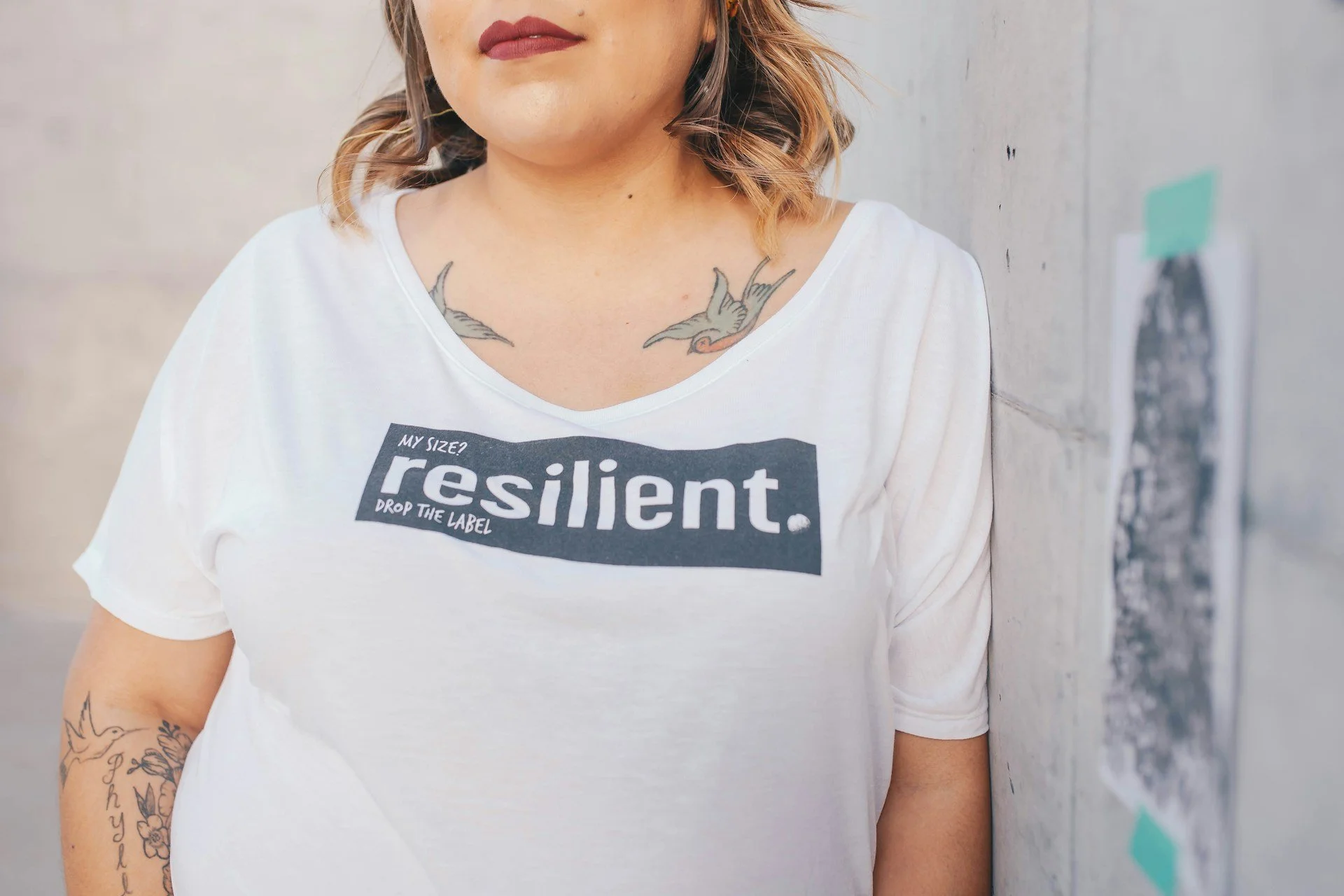
Photo by Drop the Label Movement on Unsplash
by Catharine Hannay, founder of MindfulTeachers.org
Continuing the series of Quotations for Teaching Mindfulness and Compassion, here are a variety of perspectives on how we can effectively support each other through crises and devastating loss.
Teachers, please note:
I don’t necessarily recommend giving this whole list to your students—I like to provide a lot of options so you can choose what’s most appropriate for your particular context.
I’ve included links to book titles so you can see more information about the sources of these quotes. (I don’t accept any paid links or advertising.)
Scroll to the bottom of the post for questions that can be used for personal reflection or as prompts for discussion and writing.
Community Grieving and Resilience
“One of the pillars of Tlingit culture is the communal grieving of loss and trauma. It takes years to process grief as a community, and it comes with ceremony and art and stories and song. And at the end, you come out of grief together. But that too was outlawed for a long time, right when we most needed to know how to grieve.”
“Primitive” by Vera Starbard (Tlingit, Dena’ina), from My Life: Growing Up Native in America, edited by IllumiNative
“In our hyperbusy world, grief has been minimized and sanitized. You get three days off work after a loved one dies and then everyone expects you to carry on as if nothing happened. […]
It was once common for us to come together as a community to bear witness to the grief experienced when a loved one died. But in our current culture, the mourner is made to feel that though his or her own world has been shattered, everyone else’s world goes on as if nothing has changed.”
David Kessler, Finding Meaning: The Sixth Stage of Grief, p. 30
“An ancestral line wrought
with an agony so deep,
buried for generations.
But an ancestral line
tethered to a will so strong
it could be felt for
generations to come.”
from the poem “Kutâpush, Kutâpush” by Kara Roselle Smith (Chappaquiddick Wampanoag), from My Life: Growing Up Native in America, edited by IllumiNative
Feeling Compassion
“The heart enjoys experiencing the liberating feeling of compassion; it expands and glows, as if beaming its own sun upon the world. That is the warmth our cooling emotional world so desperately needs to preserve its humanity. It is this savoring of the nature of impersonal love that lets the peacemakers of the world do our job.”
Alice Walker, We Are the Ones We Have Been Waiting for, p. 251
“Pain and loss and challenge can easily cause us to turn completely inward, enveloped by our own situation. [...] But for some, the story doesn’t end there. It progresses, leading to an inclusive and expansive caring for others.”
Sharon Salzberg, Real Change: Mindfulness to Heal Ourselves and Our World, p. 32-33
“Once we establish a steadfast willingness to recognize and accept the suffering we encounter in the world, including in ourselves, then we can cultivate a deep, unselfish wish to alleviate the suffering and begin doing whatever is needed.”
Mark Westmoquette, Zen and the Art of Dealing with Difficult People, p. 197
:“My students [at Folsom Prison]… seem to use these terms interchangeably: sympathy, empathy, compassion. I ask these felons to define their terms.
‘Well, sympathy,’ one begins, ‘is when your homie’s mom dies and you go up to him and say, ‘Sorry to hear ‘bout your moms.’
Just as quickly, there is a volunteer to define empathy.
‘Yeah, well, empathy is when your homie’s mom dies and you say, ‘ ‘bout your moms… Sabes qué, my moms died six months ago. I feel ya, dog.’
’Excellent, ‘ I say. ‘Now, what is compassion?’ […] Their silence is quite sustained[…] Finally, an old-timer… [says]
‘Compassion—that’s sumthin’ altogether different[…] Compassion… Is… God.’
Fr. Gregory Boyle, Tattoos on the Heart: The Power of Boundless Compassion
Supporting Each Other
(what helps and what doesn’t help)
“‘Call me if there’s anything I can do to help.’
The words rang hollow even as he said them.”
Anne Hillerman, The Sacred Bridge, p. 75
“‘You okay?’ Tad asked.
‘No,’ I said. ‘Worried about a friend.’
‘Anything I can do?’
‘Nope,’ I told him, ‘Me, neither.’
‘That sucks,’ he said.
‘For sure.’”
Patricia Briggs, Soul Taken, p. 249-250
“I take out a handkerchief and give it to him and wait. I’ve seen grief. I’ve had to deliver plenty of bad news.
There’s no way to help someone going through it, except to wait, and offer them handkerchiefs, drinks, food.
They need to find their own way out—all you can do is let them know you’re waiting for when they do.
I don’t know if anyone really find their way out, but it’s like getting to the windows of the house they’re trapped in. They can see outside again.”
LC Rosen, Rough Pages, p. 192
“What could you say to a dying person that would not enrage by its triviality?”
Annie Dillard, The Writing Life
“We must really see the person we are trying to comfort. Loss can become more meaningful—and more bearable—when reflected, and reflected accurately, in another’s eyes.”
David Kessler, Finding Meaning: The Sixth Stage of Grief, p. 33
“What good people can do in the face of great suffering: We sit with them in their hopeless pain and feel terrible with them, without trying to fix them with platitudes: doing this with them is just about the most gracious gift we have to offer. We give up what we think we should be doing, or think we need to get done, to keep them company. We help them to bear being in time and space during unbearable times and spaces.”
Anne Lamott, Stitches: A Handbook on Meaning, Hope, and Repair, p. 17-18
“The best way to have a conversation with someone in a difficult time is not in the talking, but in the listening. […]
So after your friend shares a piece of bad or scary news, practice waiting three seconds before responding. This sounds like a short amount of time, but in reality, it can feel like an eternity if you’re not used to it. […]
A couple of things may happen: either the silence continues—and you both learn that sitting together in introspective quiet, feeling how life can be hard, is actually pretty profound and amazing (rather than shallow and awkward)—or your friend may very well fill up the silence by talking more about what is going on. Either way encourages authentic communication.”
Dr. Kelsey Crowe & Emily McDowell, There Is No Good Card for This
Questions for Reflection and Discussion
As with any sensitive topics, please respect your students’/clients’/trainees’ decisions about how much they feel comfortable sharing with you or with the group.
Which of these are your most and least favorite quotes? Why?
What have you found to be most and least helpful when you’ve been grieving and/or recovering from trauma?
Are you from a community that’s experienced trauma? How is communal grief similar to and different from the grief experienced by an individual?
Has someone ever said something unhelpful to you when you were grieving or experiencing trauma? What happened? What do you wish they’d said or done instead?
Have you ever said something that you thought was helpful at the time but you now regret? What will you say or do differently if a similar situation comes up in the future?
Related Posts
There are many more quotations and resources on trauma, resilience, and compassion here at MindfulTeachers.org, including the following posts: