Imaginary Script: A Mindful Communication Practice
published March 24, 2024
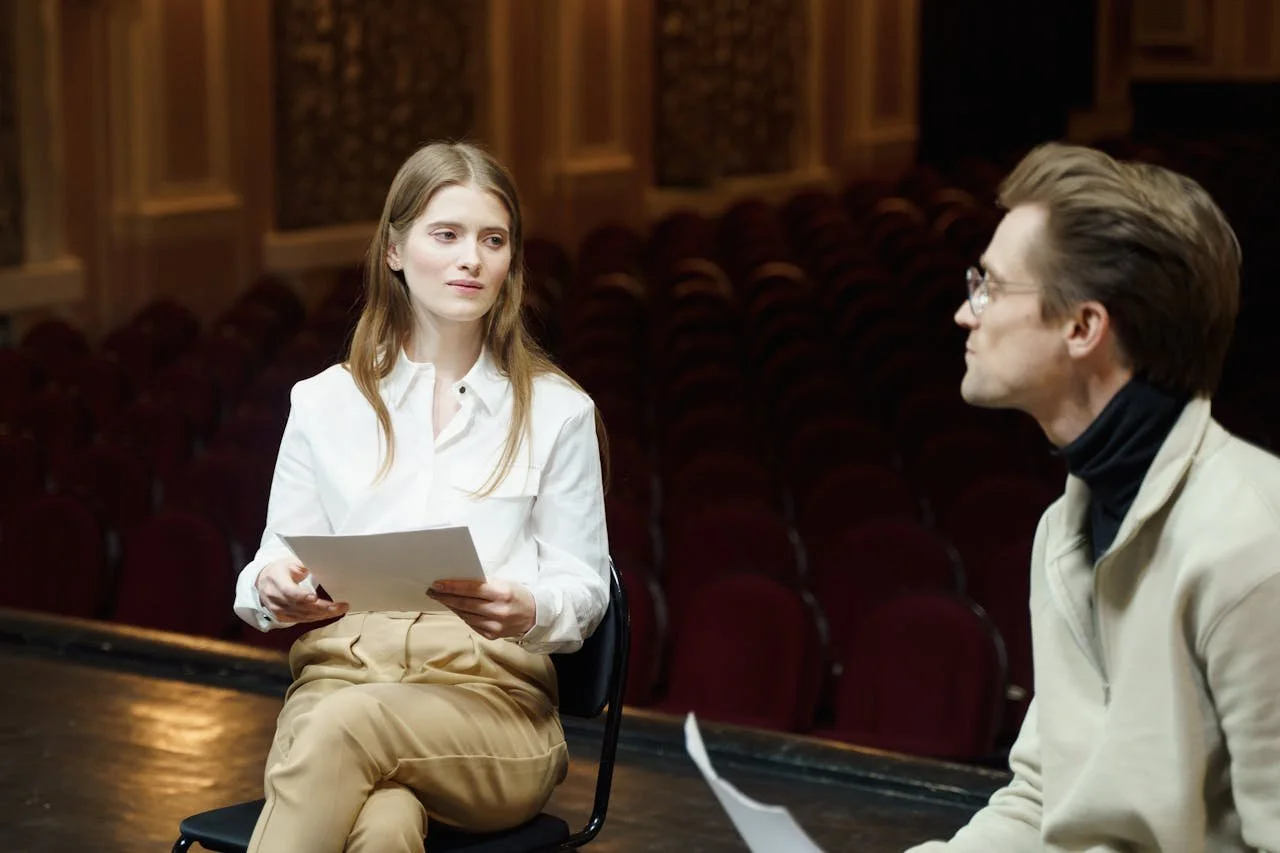
photo from Pexels by Cottonbro Studio
by Catharine Hannay, founder of MindfulTeachers.org
“When we expect a certain result, only two things can happen:
We will either find what we’re looking for or we won’t.
Either way, we are blind to all other possibilities because we were focused on our expectation.”
John Daido Loori, The Zen of Creativity, p. 197
In the short film Off Book, Nathalie is surprised when Steve brings a script to their first date. No matter what she actually says, he keeps responding based on the dialogue he wrote ahead of time.
Steve: “Have you ever been here before?”
Nathalie: “No, this is my first time here.”
Steve: “If you could just read the script. I highlighted your lines.” […]
Nathalie: “Yes, how did you know this is my favorite cafe?” […]
Steve: “So, what do you do?”
Nathalie: “I’m a pediatrician.”
Steve: “You work at a stationery store? Cute! That must be where I’ve seen you before.”
While this is entertaining to watch in a film, it’s quite annoying when it happens in real life. (Like when my doctor kept lecturing me about how women my age tend to drink too much diet soda, and I really need to cut back… after I’d already told her twice that I never drink diet soda.)
It can also cause problems when we’re the ones with the ‘script’ in our heads, so caught up in our fears or expectations that we miss signals from the other person about what’s really going on from their point of view.
The purpose of the following “Imaginary Script” practice is to help you:
become more conscious of what you’d like to happen in an upcoming conversation;
focus on what is actually happening while you’re having the conversation; and
reflect on what you might do differently the next time you’re having a similar type of conversation.
Before the Conversation
Of course, the other person won't really follow my ‘script.’ But even if the conversation is quite different from what I’d planned, it can help to think through what I’m hoping to accomplish by talking with them.
In her book We Need to Talk, Celeste Headlee compares preparing for a conversation to “walking into a grocery store with a list instead of browsing through the aisles; you’re much more likely to get what you need and leave feeling satisfied.”
Which aspects of this conversation can I control?
I can’t control what the other person will say or do, but I can control how I initiate the conversation and how long I let them speak before jumping in with my own comments and reactions.
During the Conversation
What is this person actually saying?
Are they saying something surprising, or are they confirming what I’d already suspected? Do they seem to have their own ‘script’ for the conversation, and how does it seem to be different from mine?
How can I best contribute to this conversation right now?
Do I need to just listen right now, or is it important for me to explain my side of the story?
How can express myself in a way that will improve rather than break down communication with this person right now? (This includes my choice of words, tone of voice, facial expression, and body language.)
After the Conversation
How did this conversation compare to what I imagined?
I was surprised when ________________________________.
Just as I expected, ___________________________________.
I wish I’d said ______________________________________.
I wish I hadn’t ______________________________________.
I wish they’d said ____________________________________.
I wish they hadn’t ____________________________________.
What would I like to do (the same or differently) next time?
If I’m paying attention, each conversation can teach me something that will help make a future conversation go better.
Conclusion
This practice helps us pay attention to something we often do unconsciously—we have an idea of what we’d like the other person to say, or what we assume they’re going to say, and can get thrown for a loop when they don’t react the way we’d expected or hoped. We fill in the blanks, assuming we know what the other person is going to say or do, reacting based on our assumptions, or the ‘script’ in our head, rather than responding to what they’re actually trying to tell us. It can be quite helpful to consciously imagine the conversation ahead of time, then let go of our ‘script’ and focus on what is happening in the present moment.
About the Author

Catharine Hannay, M.A., is the founder of MindfulTeachers.org and the author of Being You: A Girl’s Guide to Mindfulness, a workbook for teen girls on mindfulness, compassion, and self-acceptance. She was a teacher for twenty years, including a dozen years in the Intensive English Program at Georgetown University, and now works as a writer and editor specializing in mindfulness, effective communication, and mental health. CatharineHannay.com
Related Posts
There are many more resources on mindful communication here at MindfulTeachers.org, including the following posts: