Sustainability and Stewardship of the Earth: Quotations for Reflection and Discussion
published 4/7/24; updated 9/19/25
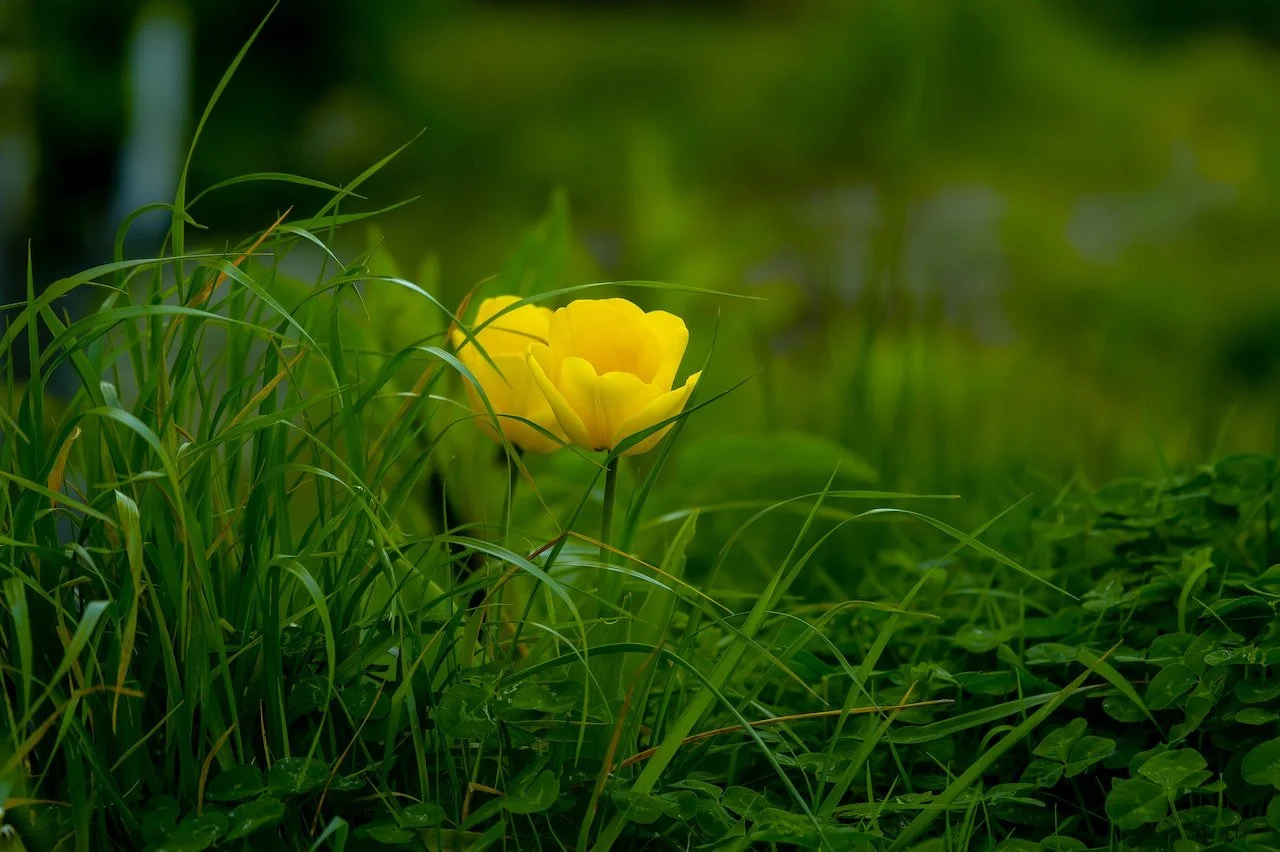
Photo by Hoang Le from Pexels
by Catharine Hannay, founder of MindfulTeachers.org
Continuing the series of Quotations for Teaching Mindfulness and Compassion, here are a variety of perspectives on excess and moderation, our connection to animals, and appreciation of nature.
Teachers, please note:
I don’t necessarily recommend giving this whole list to your students—I like to provide a lot of options so you can choose what’s most appropriate for your particular context.
I’ve included links to book titles so you can see more information about the sources of these quotes. (I don’t accept any paid links or advertising.)
Scroll to the bottom of the post for questions that can be used for personal reflection or as prompts for discussion and writing.
Excess and Moderation
“‘So, what’s new in Moenkopi?’
Dashee looked puzzled. ‘New? Nothing. Same as always. That’s how we like it.”
Anne Kellerman, Song of the Lion, p. 76
“In a consumer society, contentment is a radical proposition. Recognizing abundance rather than scarcity undermines an economy that thrives by creating unmet desires.”
Robin Wall Kimmerer, Braiding Sweetgrass, p. 111
“Contentment makes poor men rich, but discontentment makes rich men poor.”
Benjamin Franklin
“Trying to be happy by accumulating possessions is like trying to satisfy hunger by taping sandwiches all over your body.”
George Carlin, quoted in Writing to Change the World, by Mary Pipher, p. 12
"I do not waste what is wild
I only take what my cup
can hold"
'Empty Kettle,' by Louis Little Coon Oliver, quoted in Native American Literature: A Very Short Introduction
“Eat bread and understand comfort.
Drink water, and understand delight.”
Devotions: The Selected Poems of Mary Oliver, p. 76
“We want more and more and then more of it. Whatever it is.”
Marie Howe, “What the Living Do,” quoted in The Art of Description, Mark Doty, p. 135
“As you increase your haves without managing your wants, your wants will proliferate […] because your wants will always outstrip your haves.”
Arthur C. Brooks, From Strength to Strength, p. 86
“It is right to be contented with what we have, but never with what we are.”
James Mackintosh (Scottish philosopher and politician)
sign in front of a boutique:
“Your biggest regrets in life are the things you didn’t buy.”
(I saw this while talking with someone who was trying to reconcile with her estranged father before he died of cancer.)
“We live in a world that values speed. Messages that used to take days or weeks to reach their recipient arrive in our e-mail in-boxes instantly… The people we communicate with expect our responses immediately. And all of this back and forth, e-mailing or texting, innocuous as it seems, shifts our attitude to time so we might begin to value only that which happens quickly.”
Louise De Salvo, The Art of Slow Writing
“All of those self-improvement articles and advertisements make you feel you aren’t good enough. That you’re incomplete, inferior, inadequate. And what’s supposed to make you feel better? Buying the magazine and buying the product. [...] But all you’re really doing is keeping the system going.”
Bud Harris, Sacred Selfishness: A Guide to Living a Life of Substance, p. 128
“Once I could see what I already had, and what actually mattered, I was left with a feeling that was somewhere between sickened and humbled. When did I amass so many things, and did someone else need them?
If you stop thinking about what you might want, it’s a whole lot easier to see what other people don’t have. […] I have more than plenty. I know the vast difference between not buying things and not being able to buy them.”
Ann Patchett, “My Year of No Shopping,” in These Precious Days, p. 41; p. 43
“Andrew Carnegie said, ‘Show me a contented man, and I’ll show you a failure.’ In other words, the craving for more and the inability to be satisfied are fundamental ingredients of success. Huh? This is nonsense. It’s like teaching medical students that only patients who are in severe pain can be considered healthy. Nevertheless, it’s the way a lot of us have learned to think.”
Martha Beck, Finding Your Own North Star, p. 354
Mma Makutsi: “Too many people are buying cars and then driving them around. […] The government should say: There are too many cars, and you cannot have one any longer.”
Charlie: “And your car, Mma Makutsi?”
Mma Makutsi: “Our cars would be…”
Mma Ramotse: “Exempt?”
Mma Makutsi: “Yes, that’s the word. Exempt.”
“So many people had never had the chance to own a car, and now, just as they were able to afford one, along came people who said they should not have one. […] There was something unfair in that, she thought, and yet we had only one world, and only one Botswana in that world, and we had to look after them both.”
Alexander McCall Smith, How to Raise an Elephant, p. 8-10
“There is nothing inherently wrong with having possessions. It is only when consumption becomes a life philosophy that it undermines seeking higher meaning in life.”
Byron Karasu, MD, The Art of Serenity
“Our lifestyles have become extremely complex. How can we simplify our lives, reduce consumption, lower our impact on the environment, do less harm to other living things, reduce expenses, have fewer distractions, have less maintenance, enjoy more freedom and flexibility, and be able to live in a way that is less demanding? […]
In a society that assures us that more is better, it’s not always easy to trust that we have enough, that we are enough.”
John Daido Loori, The Zen of Creativity, p. 137; p. 166
“There are treasures everywhere, her father told her.
What kind of treasures? she asked.
All kinds. […] It’s a treasure if you love it. It doesn’t matter how much it costs, or whether anyone else will want it. If you love it, you will treasure it, does that make sense?”
Alexis M. Smith, Glaciers
Our Relationship to Animals
“Do you not believe that animals know grief and fear and pain? The world of men is not an easy one for them.”
Lloyd Alexander, The Book of Three, p. 121
“Only humans have human minds. But believing that only humans have minds is like believing that because only humans have human skeletons, only humans have skeletons. […] Our species best understands the world yet has the worst relationship with it. […]
No elephant will ever pilot a jetliner. And no elephant will ever pilot a jetliner into the World Trade Center. We have the capacity for wider compassion, but we don’t fully live up to ourselves.
Why do human egos seem so threatened by the thought that other animals think and feel? Is it because acknowledging the mind of another makes it harder to abuse them?”
Carl Safina, Beyond Words: What Animals Think and Feel
“Several of Nature’s People
I know, and they know me
I feel for them a transport
Of Cordiality”
Emily Dickinson, "A Narrow Fellow in the Grass"
“To this day, a number of academics still refuse to use terms for animals that refer to mental states like anger, fear, suffering, affection, or any other emotion similar to our own. […] Researchers, in their efforts not to use terms for animals that describe human emotions, […] don’t speak of cries or moans of pain, but of ‘vocalizations.’ The vocabulary of common sense is replaced by a jargon that stems more from denial than from scientific objectivity.”
Matthieu Ricard, Altruism: The Power of Compassion to Change Yourself and the World
[While at a safari camp in South Africa,]“I catch sight of several vervet monkeys bouncing around in the grass. […] As I move forward to get a better view […] five or six of the more adventurous begin to approach me, looking scared but determined. […] When the monkeys get within about three feet of me[…] ‘Whoa!’ I say, and do a little jazz-hands thing in the air.
The baby monkeys bounce backward as if yanked by unseen bungee cords. […] But then, goading each other on, they advance again […] ‘Boo!’ I shout, waving my jazz-hands high in the air.
[…] They stand up, raise their arms, and wave their hands above their heads. Tiny jazz hands! I burst out laughing, my nervousness suddenly drowned out by astonished delight.
[…] For the next ten minutes or so, I mimic the monkeys moves while they mimic mine. […] I can only hope that my playtime with the vervets was as magical for them as it was for me.”
Martha Beck, Finding Your Way in a Wild New World, p. 23-25
Our Connection to Nature
“There are always flowers for those who want to see them.”
Henri Matisse
“What is a weed? A plant whose virtues have not yet been discovered.”
Ralph Waldo Emerson
“At a summer camp that bans all electronic devices… a group of fourteen-year-old boys talk about a recent three-day wilderness hike. One can imagine that not that many years ago the most exciting aspect of the hike might be the idea of ‘roughing it’ or the beauty of unspoiled nature.
These days, what makes the biggest impression is time without a phone, what one boy calls ‘time where you have nothing to do but think quietly and talk to your friends.’
Another boy[…] reflects on this new taste for silence: ‘Don’t people know that sometimes you can just look out the window of a car and see the world go by and it’s wonderful?’”
Sherry Turkle, Reclaiming Conversation: The Power of Talk in a Digital Age
“I gave the students in my General Ecology class a survey. […] Nearly every one of the two hundred students said confidently that humans and nature are a bad mix. […]
Later in the survey, they were asked to rate their knowledge of positive interactions between people and land. The median response was ‘none.’
I was stunned. […] How can we begin to move toward ecological and cultural sustainability if we cannot even imagine what the path feels like?
[…] In the Indigenous worldview, a healthy landscape is understood to be whole and generous enough to sustain its partners. […] As we care for the land, it can once again care for us.”
Robin Wall Kimmerer, Braiding Sweetgrass, p. 6; p. 338
“The tree that moves some to tears of joy is in the eyes of others only a green thing that stands in the way.”
William Blake
“In my darkest times I have to walk, sometimes alone, in some green place.”
Barbara Kingsolver, Small Wonder
“Does anyone feel the same kind of emotion for a butterfly or a flower that he feels for a cathedral or a picture?
Yes, I do.”
Evelyn Waugh, Brideshead Revisited
“The progress of humanity seemed to be measured in the distance placed between ourselves and nature.”
Matt Haig, How to Stop Time, p. 83
“I don’t see a delegation for the four-footed. I see no seat for the eagles. We forget and consider ourselves superior. But we are after all a mere part of Creation. And we must consider to understand who we are. We stand somewhere between the mountain and the ant. Somewhere and only there as part and parcel of the Creation.”
Chief Oren Lyons, Jr., address to the United Nations (quoted in Sit, Walk, Don’t Talk by Jennifer Howd)
“The more we can name what we’re seeing, the more language we have for it, the less likely we are to destroy it. If you look at the field beside the road and you see merely the generic ‘meadow,’ you’re less likely to care if it’s bulldozed for a strip mall than you are if you know that those tall, flat-leaved spires are milkweed, upon which the monarchs have flown two thousand miles to feed.”
Mark Doty, The Art of Description: World Into Word, p. 108
“Jesus himself commonly points to things like the red sky, a hen, lilies, the fig tree, a donkey caught in a pit, the birds of the air, the grass in the field, the temple, animals which are released from their cages, and on and on. He was clearly looking at the seemingly ‘nonreligious’ world, ordinary things all around him, and appeared to do most of his teaching outside.”
Fr. Richard Rohr, Eager to Love: The Alternative Way of Francis of Assisi, p. 47
“When I walk alone in a beautiful orchard, if my thoughts are some part of the time taken up with external occurrences, I some part of the time call them back again to my walk, to the orchard, to the sweetness of that solitude, and to myself.”
Montaigne, Essays
“Though I may not believe in the order of the universe, yet I love the sticky little leaves as they open in spring.”
Fyodor Dostoevsky, The Brothers Karamazov
“It isn’t very far as highways lie […] But
[…] Going to Walden is not so easy a thing
As a green visit. It is the slow and difficult
Trick of living, and finding it where you are.”
Mary Oliver, “Going to Walden,” New and Selected Poems (1992), p. 239
Questions for Reflection and Discussion
Which of these quotations do you most/least agree with? Why?
Have you ever had a spiritual experience in an outdoor/natural setting? What were the circumstances? How did you feel?
When do you find it easiest/hardest to practice moderation? Why?
What do you think is the connection between mindfulness and sustainability?
Were you raised/Are you being raised in a tradition that appreciates the natural world? What kind of lessons did you learn/are you learning about the environment as a kid?
What are some ways that you try to help protect animals and/or the environment? What additional things would you like to try?
What is the biggest challenge for you in trying to live more sustainably?
Related Posts
There are many more quotations and resources on mindfulness and sustainability here at MindfulTeachers.org, including the following posts: