Best Practices in Teaching Mindfulness to Adults And Kids: Q + A with Jana York
published September 1, 2022
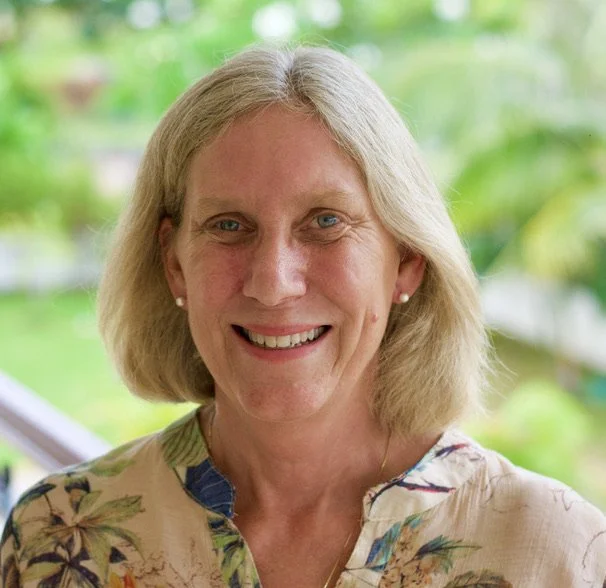
Jana York is a Certified Mindfulness and Meditation teacher and has been a mindfulness practitioner and children’s mindfulness educator for more than a decade, at international schools in Thailand and Japan. Her main passion is teaching children how to reduce anxiety and self-regulate while being in the present moment.
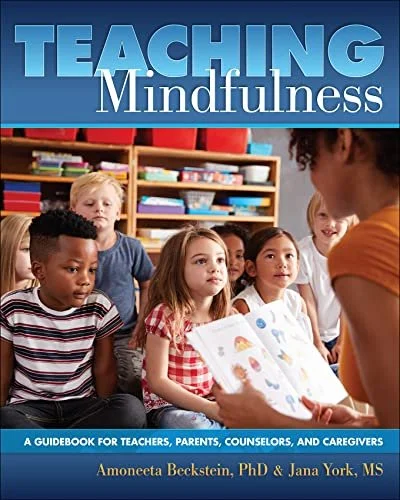
Ms. York is the co-author (with Dr. Amoneeta Beckstein) of Teaching Mindfulness: A Guidebook for Teachers, Parents, Counselors, and Caregivers. She is also the author of U-Is for Understanding – Claire’s Journey toward Mindfulness, a storytelling approach based on an eight-year old’s journey of learning mindfulness in her school. The book contains more than 30 activities to introduce mindfulness, social emotional learning, self-regulation, and gratitude. The first three chapters of U is for Understanding, and three of the activities, are available on youtube.
In this Q+A with Catharine Hannay, founder of MindfulTeachers.org, Jana discusses the similarities and differences between sharing mindfulness with adults and kids, and shares her experiences teaching at international schools and as a Health Promotion Educator for the U.S. military.
Catharine: You started out as a mindfulness teacher for adults before becoming a children’s mindfulness educator. In your opinion, how is teaching mindfulness to kids different from teaching mindfulness to adults?
Jana: In my opinion, teaching mindfulness can be appropriate for all ages and has infinite possibilities. It is not one size fits all, so it is important to state upfront that it is not a replacement for psychiatric care or a therapy for mental health issues.
Obviously, the approach is different when teaching adults and children; however, many of the concepts are the same. For example, most introduction to mindfulness courses have a section on eating mindfully and mindful walking. The principles that we are trying to emphasize are similar, but the activity may be different. Mindfulness for children is usually taught through activities and feels like games. The concepts of mindfulness are comparable, but the delivery and age-appropriate language will differ.
Being ‘present’ might be taught through listening to sounds or observing a goldfish in a fishbowl.
Compassion could be represented by a stick figure picture or coloring page, or a kind note from a friend, or sharing your crayons which creates a connection between people.
Mindful eating invites you to explore the object you are going to eat using your senses of taste, touch, sight, smell, and hearing. You do this by observing the object as if you have never seen it before and consider appreciation for how it came to be. With children it may be creating a scenario that you are an alien from a different planet, and you are exploring everything about it.
With mindful walking in adults, you bring in proprioception (the bodies capacity to know where it is in space) and reference how we do so many things on autopilot. For children it is more about your movements and how it feels to walk fast or slow. It is giving them something to concentrate on while noticing their muscles and sensations in the body.
We are helping our students learn to be present and to focus their attention, to notice distractions, feelings, and emotions and to develop a greater sense of appreciation through gratitude practices. By observing your thoughts and tuning in to your emotions with less resistance, you can develop helpful self-regulation skills.
I find that most younger children are eager to learn and don’t have the expectations that adults may have. They are not as predisposed to judgement or the hard-wired negativity bias that came from our cave-dwelling ancestors. Adults are often trying to “fix” something while children are innately curious and ready to engage in something fun. Teenagers may be offered a slightly different approach focusing on their perceived anxiety and coping with big emotions in the complexities of our fast-paced society.
Catharine: Some kids are reluctant to share their feelings with an unfamiliar adult. Do you have a favorite activity that can help them express themselves?
Jana: One of my most rewarding teachings I have had the pleasure to grow from was a mother and daughter duo growing mindfully. I initially worked with the mother on present moment awareness to reduce anxiety and worry.
The stressors of being a good parent, managing money, and achieving success had her up at night, and she needed some tools to tame the inner critic. She was ruminating or sometimes called catastrophizing. The mind was “telling stories” and overthinking that the worst would happen.
We worked on breathing exercises emphasizing the exhale to relax the body and journaling about her thoughts and recording the facts. This gave her some awareness of the negativity bias and patterns that were not serving her well. By listing positive traits of her parenting, achievements in personal and work life, she was able to see that she was not her thoughts and resulted in less anxiety.
The mom eventually asked if I would teach her 11-year-old daughter. Her daughter was intellectual and mature beyond her years; however, she too had lots of things to worry about. An adopted beautiful girl from China, living in Thailand with loving parents from Australia. Just thinking about where she was from must have been hard to process, let alone explaining to her teachers and peers. This tween had resiliency from moving from place to place with her parents working abroad.
Her shy personality and determination to thrive was clear yet she was living in a new area with no familiar faces or friendships not to mention being a tween. We met weekly for 9 weeks and initially she was not open to share her emotions and feelings. We shared the love of laughter and telling jokes.
One tool that broke the ice for expressing her emotions was a game called “My mind feels, My body feels.” The activity is from Susan Kaiser Greenland’s book, Mindful Games, and served as a great way for us to open up to each other.
The idea is to you pass around an object (we made stress balls together) and each student will say what they are feeling in a word or two. My mind feels busy, my body feels tired, etc. At the beginning of each lesson after that we squeezed the ball and shared what the mind and body were feeling. The growth mindset and willingness to express herself excelled over the next 8 weeks. To this day we keep in touch across the miles.

Catharine: In your work with students from a variety of backgrounds and in a variety of settings, have you found any differences in the types of activities or explanations that work most effectively in introducing mindfulness?
Jana: It is important to know your environment and culture when teaching and make use of the resources around you. While teaching mindfulness to elementary students in Asia I was preparing my favorite lesson which is appreciation and gratitude for things.
The exercise involves giving each child a grape and discussing how it came to be from when it was a tiny seed to being a ripe grape placed in their hands. You can use this exercise in many ways to suit your teaching styles. It can be class participation of writing on the board or working in dyads or small groups. The students list each detail including the environmental needs (water, sunlight) to the people that it takes to care for the grape before and after harvesting, and so on.
I am always amazed at what they come up with and it serves as a good reminder to have appreciation and be grateful! You can find more details on how to teach this activity in Teaching Mindfulness: A Guidebook for Teachers, Parents, Counselors, and Caregivers.
On the last day of teaching mindfulness to the students, they asked if they could go outside to the garden, which I did not even know it existed. The desire to share their garden validated their understanding and interest in mindfulness. The sustainable school had their own garden in which they cultivated fruits and vegetables, many of which were consumed by the students and staff at lunch time, snack time and were free to take home for needy families.
Upon reflecting on the 8 weeks with the students, I decided to use the garden as the theme for the next time I had the opportunity to teach at their school. This was such a beautiful metaphor to me. Using your senses to be present in the garden, pulling weeds as a way to let go of unwanted thoughts and things that are not serving you well, and watering the plants to nourish them and ourselves. After all - We are planting seeds of growing more mindful!
If anyone has a garden at their school, I would love to hear about it, to add some mindfulness to the mix!
Catharine: You grew up in a military family and worked as a Health Promotion Educator for the U.S. military for many years. How can mindfulness benefit personnel and their families?
Jana: First, I can definitely relate with my young students when we discuss change and acceptance of things just as they are. As a daughter of military parents, we moved a lot in my early years. In fact, we moved three times before I was nine years old, which is the norm for military personnel. I was a shy child most likely because I didn’t feel grounded, lacked lasting friendships, and often felt worried another move was coming.
With caring parents and compassionate teachers at my side, I gradually learned that change is constant and living in the moment is something to embrace. The poetic words of the wise sage Oogway to Po in the movie Kung Fu Panda were unbeknownst to me as a child, yet certainly resonate today. “ Yesterday is history, tomorrow is a mystery and today is a gift, that is why it is called the Present.”
As far as my experience of teaching mindfulness to adults on a small army base in Japan, it began as a collaboration with an army physician with our intention to help soldiers with effective and proven treatments for Post-Traumatic Stress (PTS), suicide prevention and improved well-being. Unfortunately, it was a hard sell to active-duty personnel. At the time (2010-2017) seeking mental health support was considered a weakness and often viewed as a stigma.
Most of the participants in our courses were civilians, DOD [Department of Defense] teachers, and military family members. The classes were well received with outcomes of reduced perceived stress, better sleep habits, and less reactivity. Some of the participants lost weight and quit smoking as a result of improved self-awareness.
Since that time, the military has implemented more resiliency trainings and many bases have Army Wellness Centers that include classes in mindfulness.
Mindfulness is in some sense a support mechanism and a way to be proactive in dealing with daily stressors. It is a way for small communities to connect and thrive together.
Catharine: What do you currently do in your own personal mindfulness practice, and how has it evolved over the years?
Jana: My mindfulness practice began, as with most people, by feeling restless, questioning if I was doing it right and to being overwhelmed with the constant chatter in the mind. It has evolved to a practice of peace and an essential tool for my personal growth.
My regimen includes formal and informal practice. Formal consists of sitting, mindful walking or being still observing my breath allowing my thoughts to come and go. I begin most days with a silent or guided meditation for 15-30 minutes. I have a dedicated space to engage mindfully. Sometimes it is simply sitting up in bed offering gratitude for the new day and paying attention to my thoughts before my feet touch the ground.
It does take effort and can be like getting motivated to go to the gym at times, but it is beneficial to the clarity and mood in my mind. I love the outdoors, so most mornings consist of watching birds or listening to the sounds around me.
Informal practice is when I try to take mundane tasks and apply a sense of awareness and presence to them like preparing a meal and taking a few cleansing breaths throughout the day. The STOP practice (Stop, Take a breath, Observe your thoughts, Proceed) is very helpful to me when I feel annoyed, am overthinking, or just need a cleansing moment.
Learning to pause has reduced my reactivity with more thoughtful responses. It’s a work in progress for me and one that I value highly for improved well-being.
I have been doing a gratitude practice with a friend for over 5 years now and it has transformed my life in many ways. No matter how difficult the day there are always at least 3 good things that have happened. We send a text to each other daily listing 3 good things we noticed on that day. It might be one word or a sentence, with no requirement to explain anything.
Whether being still or weaving mindfulness throughout my day, I claim it as my superpower and time well spent!
Related Posts
There are many more resources on practicing and teaching mindfulness here at MindfulTeachers.org, including the following posts: