Slowing Down and Developing Awareness: Q+A with Laura Jean Gannan
published September 6, 2022
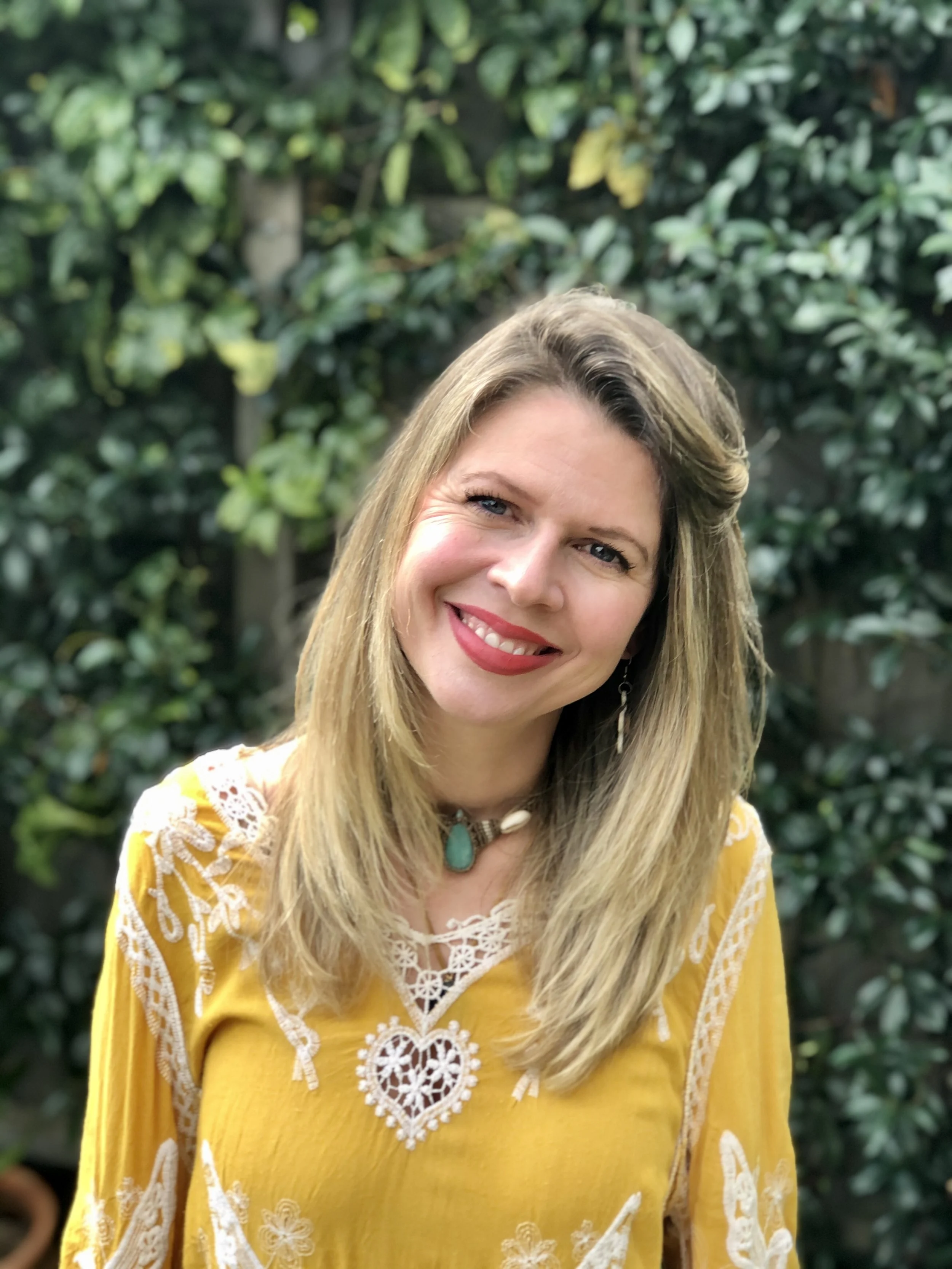
Laura Jean Gannan is a school counsellor for students 5 -18 years old in Melbourne, Australia. Over the years, she’s worked with children as a babysitter, entertainer (clown, fairy and the occasional Barbie!), radio presenter and Play Therapist. From 2009 to 2012, she worked for the nationwide UK organization the Place2be, starting as a volunteer Play Therapist and later moving on to be a School Project Manager.
Ms. Gannan is the author of Levi Leaf Rider, a children’s book about slowing down and paying attention.
In this Q+A with Catharine Hannay, founder of MindfulTeachers.org, Laura discusses how adults can help kids (and themselves) become more aware of their internal and external experience.
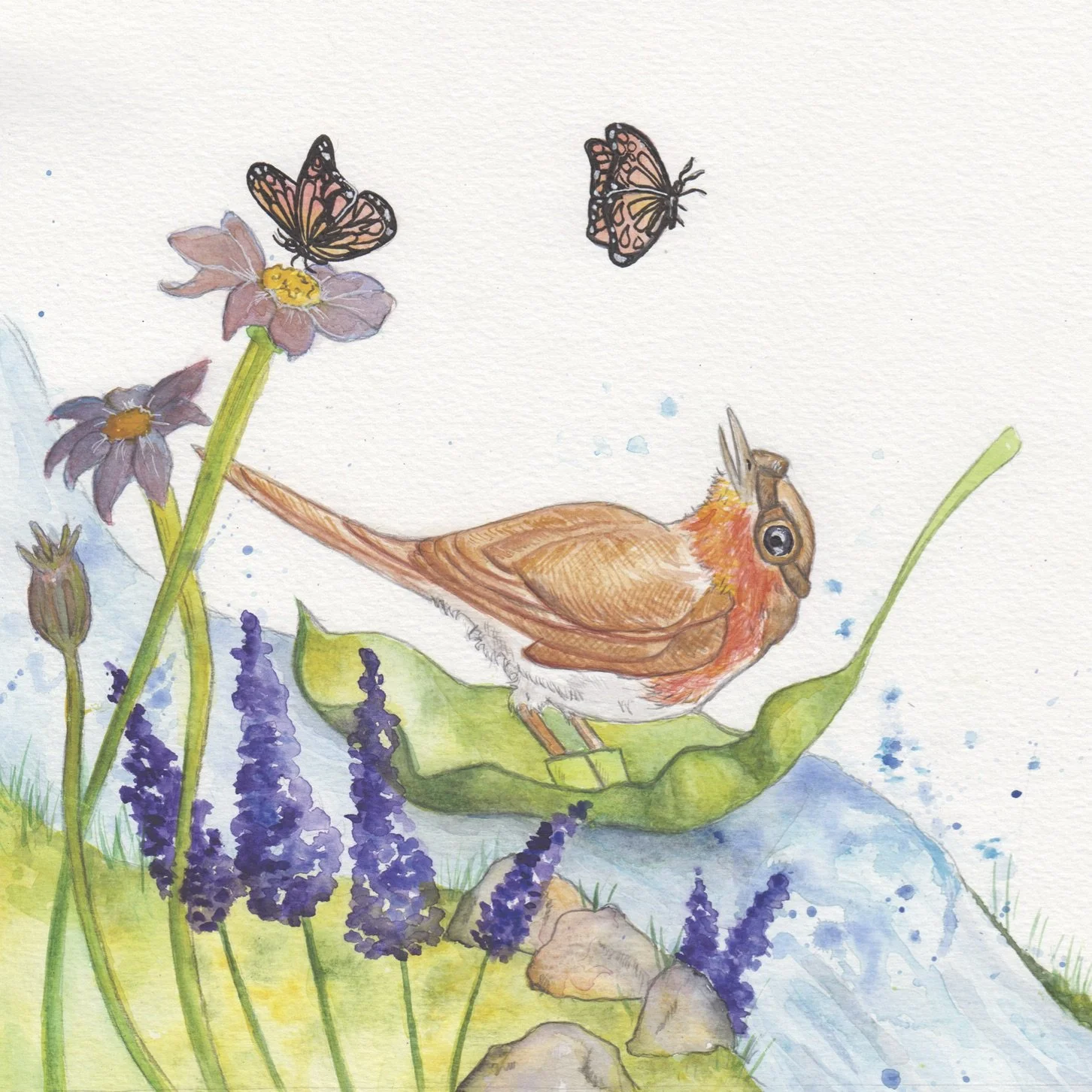
Illustration by Annie Dalton @daltonart from Levi Leaf Rider by Laura Jean Gannan
Catharine: Levi the Robin “travels by leaf,” gently floating down the stream and observing all the details of the natural world. How can humans “travel by leaf” in our daily lives?
Laura: Our lives have become busier than ever. If we have a spare moment, we often fill it with life admin on our phones or social media. Before phones we had time to stop, slow down and reflect a little more. This helped us to process how we were feeling and why.
Spending time being in nature, being still and doing things that indulge our right hand side of our brain (the creative side) and moving away from the left (logical side) can help us to effectively ‘travel by leaf’ in our personal lives.
Catharine: In the story, sometimes Levi daydreams and sometimes he flies high in the air to get a bird’s-eye view. Why did you decide to include these different types of perspectives rather than having Levi just focus on the details of his surroundings?
Laura: Often if we get stuck in life, we are only able to see things from one perspective. Our experience is based largely on our own unique perception of the world. Sometimes it takes seeing this from a clear perspective to free yourself from this stagnant place. Effectively I feel counselling can also help provide this insight.
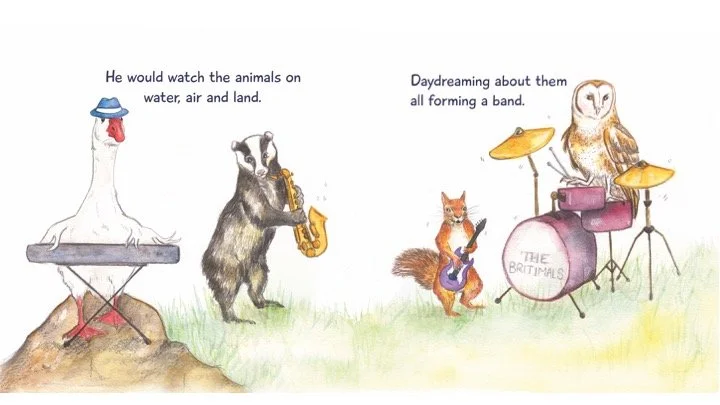
Illustration by Annie Dalton @daltonart from Levi Leaf Rider by Laura Jean Gannan
Catharine: You’ve had quite a range of experiences in working with kids. How is the role of a play therapist different from being a babysitter or entertainer, and how did each of these jobs help you prepare for your current work?
Laura: I certainly can get in touch with my inner child, and don’t tend to take myself too seriously. This is very much required to be an effective babysitter or children’s entertainer.
The role of a play therapist is different, in very subtle ways. Often children struggle to make sense of their experiences and play can be a way of helping them to make sense of their world, in their own way. As an adult we tend to want to fix things, help kids not to feel frustrated, stuck or upset. In play therapy you don’t offer to help fix, you allow the child to fail. This helps them learn, to tolerate failure, which in turn helps build their resilience.
Other major differences are consciously empathizing with the characters and situations in the play, and allowing them to direct all play (within the boundaries established in your early contract with the child). In play therapy we are conscious not to value or praise their drawing/art creations/play, but to be more be curious how they feel about it, so they develop a greater sense of autonomy, and do not need to rely on external praise.
There are other differences; these are just a few examples.
Catharine: In your current work as a school counselor, what types of issues do the kids need help with, and how do you incorporate mindfulness in your counseling sessions?
Laura: A whole range: parental separations, anxiety, depression, low self-esteem, disordered eating, NSSI (self-harm), SI (suicidal ideation), friendship difficulties, loss. The list is endless really.
I often reflect on the importance of self-care, and mindfulness is really one of the best ways to achieve more balance. I love showing students Mindfulness Body Scan Meditations, so they are able to notice in person, how they feel before and after. We also offer whole classwork sessions, and in fact I have brought Levi Leaf Rider in to read and we end with a mindfulness activity to check in with our bodies.
I created an acronym BEEPS which we use throughout our school:
B: Balance,
E: Exercise and Eat Well,
E: Express don’t repress,
P: Plan and prioritize; and
S: Sleep enough.
Catharine: What do you do personally to practice mindfulness and self-care, and how does this help you in your work?
Laura: I am a deep thinker and a highly sensitive person, so I need to ensure I have the correct balance. I find running can be a form of mindfulness for me. I also practice breathing and I paint to achieve mindfulness.
Being OK, helps me be able to give 100% attention to my students and have more resilience for life’s inevitable challenges.
Also a big part of self-care for me is knowing my own boundaries, in every facet of life. This is something I am constantly working at.
by Laura Jean Gannan, sung by Alison Williams, illustrated by Annie Dalton @daltonart
Related Posts
There are many more resources on mindfulness for kids here at MindfulTeachers.org, including the following posts: