What is Emotionally Responsive Teaching?
published 11/30/22; updated 8/2/25
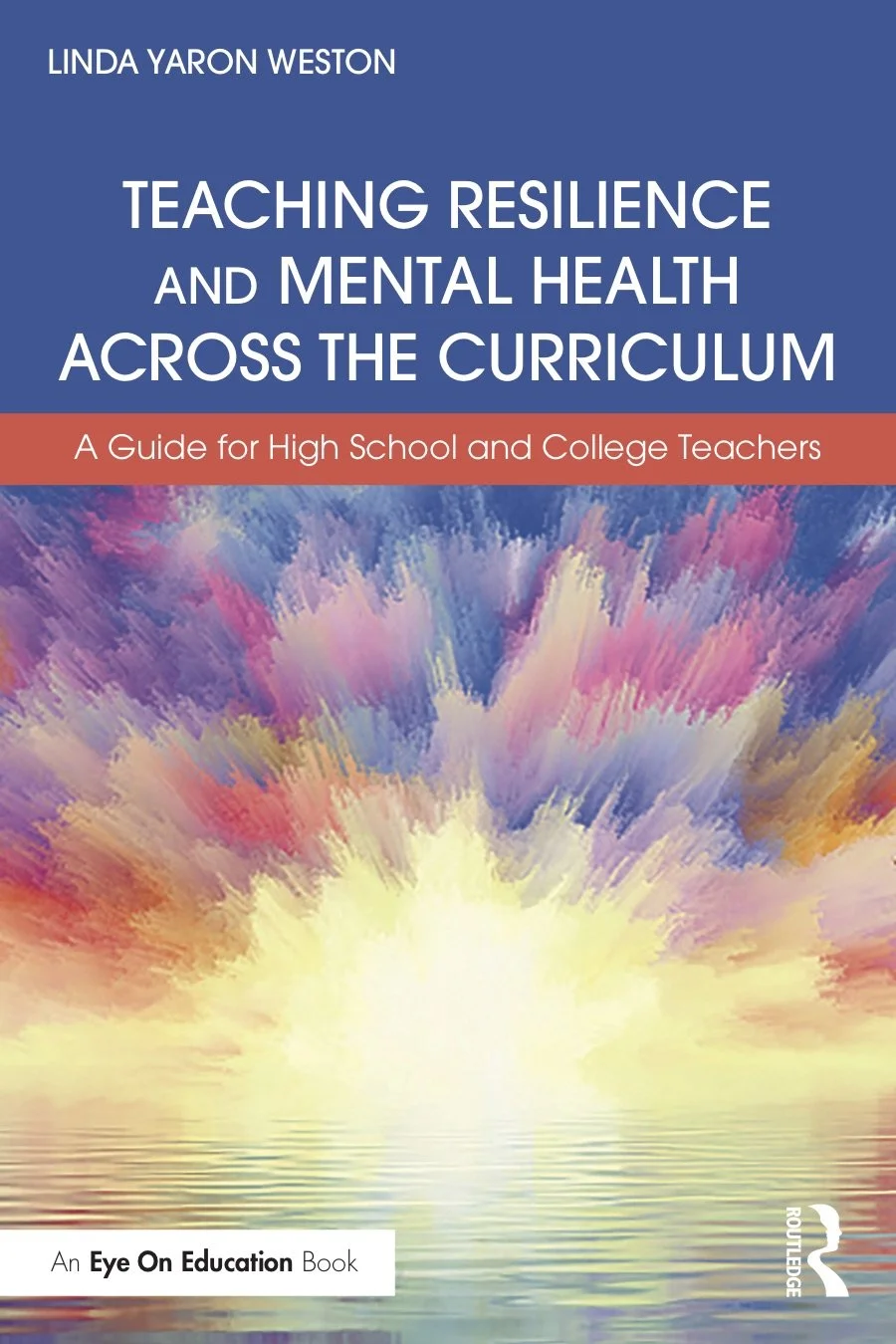
by Linda Yaron Weston, from her book Teaching Resilience and Mental Health Across the Curriculum
Emotionally responsive teaching includes a sensitivity to understanding the lives and challenges that students face, both in and out of the classroom. It means teaching awareness tools to deal with the complex emotions of what it means to be human and to be them. It means placing the cultures and the students we teach at the center of the curriculum, with the classroom as a bridge between a student’s culture and the culture of schooling. How do we hold, process, and respond to our emotions and the emotions of those around us?
As an educator, I came to realize that if I was to be able to teach academic literacy skills, then my teaching would need to be responsive to the cultures, challenges, traumas, and emotions that my students faced. If my classroom was to truly create conditions for my students to thrive, then I needed to create a community space where they were able to share their challenges and build emotional literacy skills alongside the academic content.
The mental health challenges students and teachers faced through the pandemic magnified the importance of intentionally supporting socioemotional learning. Lena (names changed to protect student privacy), a student in my mindfulness course, noticed that building emotional literacy tools helped her be more responsive.
“I feel that I am more open and also more mindful of my emotions and how they play an important role in my health.”
She noticed she felt calmer and less reactive toward her emotions.
“I don't let them overpower me. Instead, I listen to them and determine what is the best response to it.”
Situating emotional literacy alongside academic studies explicitly teaches tools to navigate life challenges. It is not something that somehow happens. It is built through intention matched with purposeful action. This is, of course, not to say that students do not already possess a wealth of resources in coping with emotions, but that through targeted practices it is possible to grow emotional literacy in the same way we might grow academic literacy skills.
At the broader school level, this can include structuring supports into the school day—not as an additional thing to add to the already full plate of teachers, but as a shift in the way we think about the plate itself.
At a school-wide level, this can take the form of well-being courses, guest speakers, curriculum projects, awareness days, student clubs, after-school and lunchtime sessions, or including quality professional development in well-being supports, mental health, and emotional literacy.
Teacher education programs can include pedagogy on emotionally responsive, trauma-sensitive curriculum as a component of culturally responsive teaching.
To teach emotional responsiveness is to include the challenges that students face on an emotional and mental health level, both collectively and personally.
This is not separate from teaching academic content, but a vehicle for it. In a Fall 2019 survey of my Introduction to Mindfulness courses at the USC, 41% of students said that the course much or very much impacted their studying or grades— whether breaths to calm their nerves before an exam, mindful study breaks, or coping with difficult emotions that arose with learning academic content.
“As I was getting frustrated while studying, I had this other option, which many times while studying you feel that there is no other option,” Devin, a sophomore business major, reflected.
He found that meditation gave him a perspective and assurance that he would be okay and learn the material in time.
“Many times, I would just quit, but this time even a little step away from the desk can reshape your entire perspective on the situation.”
A junior in my mindfulness class, Philip, was a serial procrastinator. Every assignment was turned in late. He admitted that this was how he operated across classes through his schooling. I invited him to explore the underlying cause of his procrastination and suggested he bring mindful awareness to it. He came to realize his relationship between stress and procrastination. He observed that procrastination was a coping response to his stress.
“For me, stress is one of the causes of procrastination,” he reflected. “When the tasks in front of me seem insurmountable, procrastinating adversely allows me to not think about the stressful things I need to get done.”
Through learning to identify his emotions and work with them more skillfully, he was able to use alternative, healthier coping mechanisms.
“If I can just take ten minutes to meditate and sit with my feelings of stress and anxiety and whatever else, then the obstacles in front of me do become more surmountable, and I can break things down into bite size pieces and formulate strategies to overcome them, rather than simply procrastinate to suppress the not great feelings they create.”
For all the teachers who have had to remind Philip to turn in late assignments through his schooling, what a breakthrough for him to realize that he can have a healthier response to stress through building emotional literacy tools.
As schools and districts step into this new era in education, it is not just a luxury, but a core component of schooling to think about how we intentionally include well-being, mental health, and emotional supports for students and teachers.
What does it take for our students to thrive in school and life?
What tools and conditions do teachers need so that their students can access the academic content in a way that is sustainable and meaningful?
On taking a mindfulness course in her school schedule, Ellie, a senior business major, reflected,
“Having this class and going through academics at the same time, it was kind of like a constant reminder to check-in with myself and see what I needed, and it made space for self-care and reflection.”
She was able to intentionally check in with herself through the semester to ensure she was doing things that helped her de-stress, like spending time with friends, meditating, and exercising. In doing this, she reflected,
“I was able to actually be more productive in my classes and just show up better in my relationships and my classes and be less stressed overall. Basically, it just helped me create this habit of balance and showed me the power of having balance.”
Questions for Reflection and Discussion
1. What emotions come up for you and your students in the classroom? How do you typically cope with them?
2. What does emotional reactivity look like in the classroom?
3. What does emotionally responsive teaching and learning mean to you and what does/might it look like in your school or classroom?
Excerpted from Teaching Resilience and Mental Health Across the Curriculum. © Linda Yaron Weston. (Routledge, 2022)
About the Author

Linda Yaron Weston is the author of the books Teaching Resilience and Mental Health Across the Curriculum and Mindfulness for Young Adults.
A National Board Certified Teacher with twenty years of classroom experience teaching academic and well-being courses at the high school and college level, she lectures at the University of Southern California, where she developed their undergraduate mindfulness course. Across grade levels, she regularly leads professional development for educators on how to integrate mindfulness and well-being support in the classroom.
Her article “The Confidence to Cope: Building Well-Being Tools in a University Mindfulness Course” was recently published in the Journal of American College Health.
Related Posts
There are many more resources here at Mindful Teachers on resilience and mindfulness in schools, including the following posts: