published April 25, 2024

Kenya D’Agustino is the author of The Little Thoughts Inside, which teaches kids about inner conflict and how to listen to and follow what’s inside.
In this Q+A with Catharine Hannay, founder of MindfulTeachers.org, Kenya shares her thoughts on coping with anxiety, avoiding ‘toxic positivity,’ and being aware of ourselves.
Catharine: Your book emphasizes the importance of trusting our hearts and not getting caught up in anxiety and self-doubt. Do you have any advice for parents and teachers on how to help anxious and insecure kids?
Kenya: I'm an auntie, not a mental health professional, but I'm happy to tell you what's worked for me and what I share with others.
For the older kids, my advice is to talk to the anxious person and ask them to make a choice. They first have to care about feeling better and choose to want to feel better. Once they say yes, they have to take the time to find what "tools" work to bring them a different awareness. Care and awareness are it, no matter what the issue is.
For the littlest ones, my book is one tool to help plant a seed and teach them not to listen to every thought that pops into their heads (negative or positive). Teach them to get quiet for even a second to "hear" a new thought or simply to breathe and calm down.
Catharine: You wrote a song called "Follow Good Thoughts" to accompany the book. What do you mean by 'follow good thoughts,' and how is this different from 'toxic positivity'?
Kenya: I'm not a positive mantra person or against it, nor do I think someone should push down or pretend they are happy when they are feeling overwhelmed. It's more like surrendering to what's happening instead of trying to push it away or stop it – which seems to make it worse.
Thoughts always pop into our heads, and the song's message is you can follow the good ones when you play because playing is supposed to be fun. Also, to show that things are not that serious and who cares if you are not the best at something, which the video illustrates. The question is, are you having fun?
This notion gets easier with age, but again, it helps plant a seed for them to know that it's possible to follow the good thoughts instead of the bad ones. Learning sooner than later that you have the power to make a choice and ignore or dissolve the negative thoughts that say you suck as much as possible is everything.
Kenya D’Agustino ft. Brooke Peasley
Catharine: Sometimes what feels good in the moment isn't what's healthiest or most beneficial for us. How would you explain to kids the difference between following their heart and being impulsive?
Kenya: The best advice I heard was to notice the energy inside when you go to do something. Do you feel rushed, too excited, too angry, too sad, or too overwhelmed? You can feel different about something in less than an hour, and nothing is that urgent, so always take a minute.
Also, everything can feel impulsive-ish until it's not. You can have a gut feeling, get ahead of it, think positively about it, manifest it, decide it's good for you, decide it's coming from a higher place, and that's all very cool. Yet, in my experience, you never know or see the entire truth of a life choice until you do. For most of us, it usually takes time to see it; maybe in death, we see it the clearest. Who knows.
Catharine: Your day job involves marketing and media relations. What place (if any) do you see for mindfulness and compassion in this type of work?
Kenya: I think it's important everywhere, and we bring our level of awareness wherever we go. We have no choice. Plus, there is usually no turning back once you are fully aware of something. There are many articles, posts, and newsletters about how to treat work situations, employees, clients, etc., but I see no difference between work and life. Our humanness, awareness, and everything go with us in every situation.
Also, I don't think anyone needs to be fakely kind all the time. Nothing is wrong with being bold and direct when the situation calls for it. And the more aware we are, the better we all are. Looking in the mirror is harsh, but it works when you want it to.
Catharine: The Little Thoughts Inside was inspired by your own struggles with inner conflict. Were there any specific practices that helped you learn to listen to your own inner truth? And what do you do currently to practice awareness and self-compassion?
Kenya: Yes, many! First, during my teens, when I was struggling with anxiety and OCD, a therapist told me that I could visualize a stop sign and stop the repetitive thought or action and deal with what came next. It was feelings, and they won't kill you. That was the first thing that truly put me on the path to realizing I have more power than I know.
I quickly learned that this compulsive behavior was not who I was.
I never took medication for anxiety or OCD. I tried to figure out how to relax, dig in, and work through any issue the best I could with what worked. It was not easy, especially in my teens and 20s, but I got clearer after I stopped partying and with age.
Then, besides my therapists', family, and friends' advice, I listened to or read what other teachers said. Melody Beattie, Lucinda Bassett, Tony Robbins, Wayne Dyer, and others shed many different lights on helpful strategies.
Next came my sister’s gift, Eckhart Tolle, learning about the subconscious and unconscious mind, getting quiet/still, and breaking away from my thoughts when I can. Breaking away means I don't stew in them and follow each one to become even more mad, sad, or even too hyped. Most times, I'll get quiet or write, and both appear to bring more truth than I can think (it's more from within).
I'm kinder to myself now because of the combination of everything I learned above and continue to do. Also, I came to terms with the fact that by being unaware, I hurt myself and others. It was how it was supposed to be because I didn't know better or care to know better then—and turning 50 changes you yet again. You see things differently. They were all right.
Today, the coolest thing is helping myself from the inside out. That's why I wrote this book. We all have "it," and the truth seems to appear when we get quiet. And then more truth comes after, and after and after…
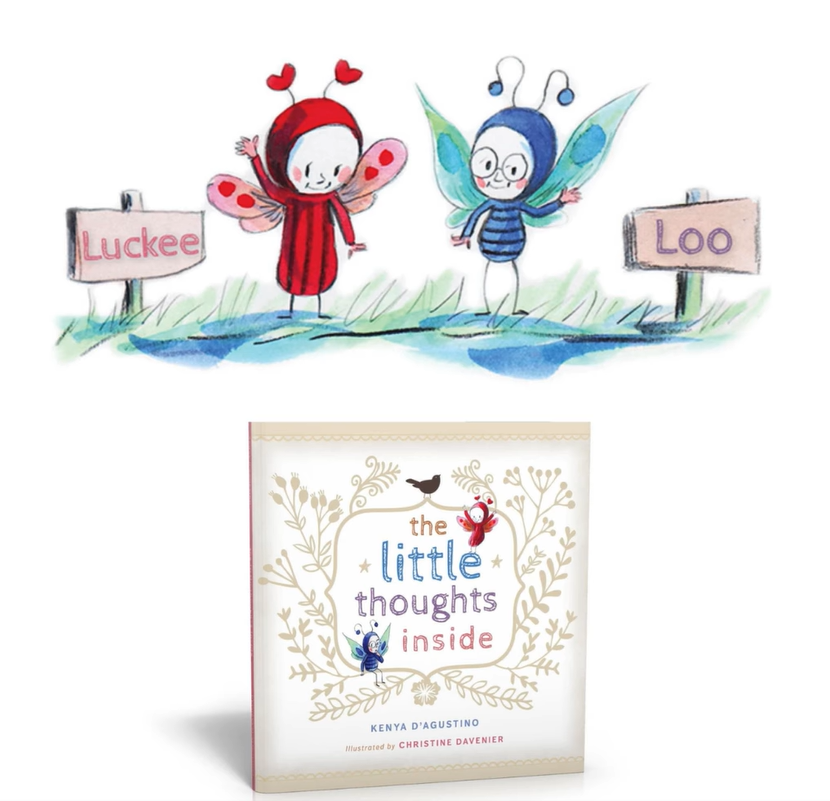
by Kenya D’Agostino
illustrations by Christine Davenier
Related Posts
There are many more resources here at MindfulTeachers.org on self-awareness, self-acceptance, and SEL, including the following posts: