Children's Authors Discuss Mindfulness, Compassion, and SEL
published 9/29/20; updated 9/7/22
by Catharine Hannay, founder of MindfulTeachers.org
Over the past few years, I've had the pleasure of discussing mindfulness, compassion, and SEL with many children's authors and author/illustrators.
I thought it would be useful to gather all of these interviews in one place. That way, you can:
learn about best practices in teaching mindfulness to kids;
find out how these authors practice mindfulness themselves; and
discover new books for your students or your own children to enjoy.

Best Practices in Teaching Mindfulness to Adults and Kids
Q+A with Jana York, author of U is for Understanding: Clare’s Journey Toward Mindfulness and co-author (with Amoneeta Beckstein) of Teaching Mindfulness: A Guidebook for Teachers, Parents, Counselors, and Caregivers
“We are helping our students learn to be present and to focus their attention, to notice distractions, feelings, and emotions and to develop a greater sense of appreciation through gratitude practices. By observing your thoughts and tuning in to your emotions with less resistance, you can develop helpful self-regulation skills.”

Slowing Down and Developing Awareness
Q+A with Laura Jean Gannan, author of Levi Leaf Rider, a children’s book about slowing down and paying attention.
“As an adult we tend to want to fix things, help kids not to feel frustrated, stuck or upset. In play therapy you don’t offer to help fix, you allow the child to fail. This helps them learn, to tolerate failure, which in turn helps build their resilience.”
Children's Stories for Social Emotional Learning
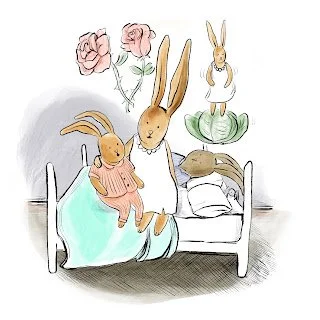
Q+A with Noah Teitelbaum, author of Munchy and Jumpy Tales, illustrated stories teaching gratitude, diversity, inclusion, and equity.
"It’s easy to forget to be grateful for the good things that happen during a day marred by one or two tough moments. It’s just as easy to avoid acknowledging the tough parts of a day. [...] Mindfulness and social-emotional learning is not going to make tough days go away. We want to develop the ability to face them honestly and squarely and to have the skills to move on in a healthy manner."
Noah Teitelbaum
How Mindfulness Can Help Us Wake Up to Oppression and Suffering
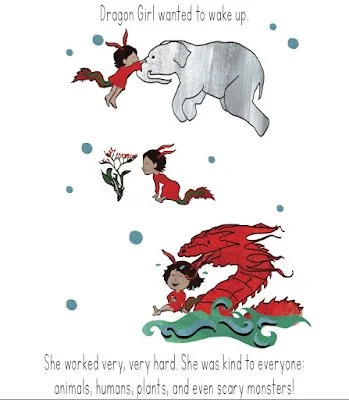
Q+A with Jade Bryan, author/illustrator of Dragon Girl, a children's book based on the Lotus Sutra and traditional Buddhist cave paintings.
"Mindfulness really is inseparable from ethics, because we can’t reduce suffering (of ourselves or others) unless we look at everything and everybody as interconnected. Collective suffering is our own suffering—-but so is collective healing."

Children's Author Explains How to Tame a 'Want Monster'
Q+A with Chelo Manchego, author/illustrator ofThe Want Monsters and How They Stopped Ruling My World and Little Royal: A Fish Tale.
"The more I practice mindfulness, the more I can engage with people who are different from me, who maybe in the past I would have ignored or gotten carried away by their influence. Now I am surer of who I am and therefore more willing to listen with equanimity, whoever they are. "

Children's Author Emphasizes Mindfulness and Self-Acceptance
Q+A with Sarah Kraftchuk, author of Love to Be Me!, I Am. Magical Me!, and The Hue in You.
"The practice of self-acceptance allows us to embrace our whole being and what makes us unique... It's important to embrace each moment with an open mind and nurture an environment where students feel safe to explore their learning... [and where] teachers become aware of and connect with their students' diverse and changing needs."
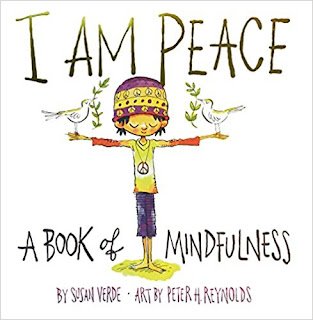
Children's Author Teaches Yoga, Mindfulness, and Compassion
Q+A with Susan Verde, author of I Am Yoga, I Am Peace, and The Water Princess.
"The practices of mindfulness and yoga are really ones that we embody, not just engage in at a distance. They are ways of being in the world. When I work with kids doing yoga and mindfulness they become the practice. When we are in tree pose they are trees…exploring how it feels in their minds and bodies."

Children's Book Helps Kids Cope with and Grow from Failure
Q+A with Tamara Levitt, author of Happiness Doesn't Come from Headstands and The Secret to Clara's Calm.
"There is so much emphasis on achievement that when children fail it leads to disappointment, frustration and shame. And those aren’t motivators to keep trying. Failing often leads to quitting and lack of self-worth... When a child is distraught about what they can’t do, remind them of all the wonderful things they CAN do and have LEARNED to do, and the wonderful qualities that make them who they ARE."
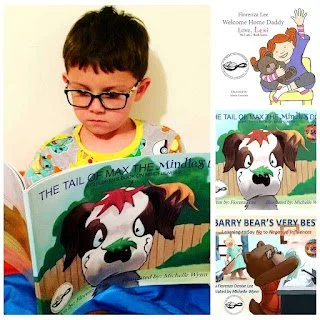
Mindfulness Helps Kids and Adults Handle Stress
Q+A with Florenza Lee, author of The Tail of Max the Mindless Dog.
"We may not have control over the situation, but we do have complete control in our response. My grandmother used to tell me as a child, 'we cannot stop birds from flying over our heads, but we most certainly can stop them from building nests in our hair'.”

Conscious Stories Teach Mindfulness and Connection
Q+A with Andrew Newman, author of an award-winning series of Conscious Stories for children.
"We don’t want to ignore [negative thoughts] or magic them away, but we do want to offer another, more positive perspective. When parents or carers (caregivers) connect and show love at bedtime they counteract the difficult moments of the day, sending the kids to sleep feeling safe, loved and like they matter. Then they can wake into natural confidence and self-esteem."

Mindfulness and Self-Compassion for Children and Healers
Q+A with Dr. Heather Krantz, author of Mind Bubbles: Exploring Mindfulness with Kids and Heart Bubbles: Exploring Compassion with Kids.
"The key is to not overwhelm young kids with too much information. Having a visual tool to aid understanding is very helpful when explaining something that can be conceptually abstract even for adults. I blow soap bubbles to show that thoughts and feelings are like bubbles—they float in and out and pop—and new ones come along."

Mindfulness Tips from a First Grade Teacher and Children's Author
Q+A with Kathy Marvel, author of And She Said Breathe.
"Using our mind to help focus our body is an essential skill I strive to teach my kids each and every day in whatever they are doing. The breathing techniques in And She Said Breathe are the same ones that I teach throughout the year and we use daily for different purposes – whether that is to calm down, relax, gain energy, or just plain release some energy."

Photo-Illustrated Mindfulness Books for Kids
Q+A with Tracy Bryan, author of Being Happy! A Kid’s Guide to Understanding Mindfulness, Being Focused! ADHD and Mindfulness, and Feeling Sensitive: Being a Highly-Sensitive Kid.
"Children need a guiding voice in their books that will entertain them, remind them that they are loved, assure them that they are beautiful and unique just the way they are, and give them something for their "coping toolbox" when they face strong emotions or challenges."
Mindfulness, Creativity, and the Five Senses
Q+A with singer Sarah Lessire, author of The Scent of Dreams.
"Shifting our awareness to the lens of a bodily sense helps with becoming more embodied beings, and allows us to drop the mental chatter. I find it impossible to create anything, to connect to any form of inspiration if I’m not able to first feel my body, the temperature, hear the sounds, etc."
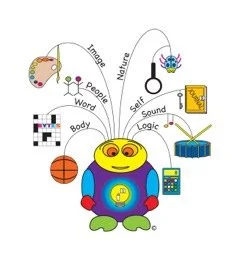
Multiple Intelligences Lead to Mindfulness
Q+A with Kathleen Hackett, author of Mindfulness! Not Mind Full Nest!
"We are all born with multiple intelligences, and we use them to help us be aware of the present moment. We use... our Naturalist intelligence to be cognizant of the natural world around us... our Intrapersonal intelligence to know our inner self... our Visual Spatial-Visual intelligence to see the visual images surrounding us..."
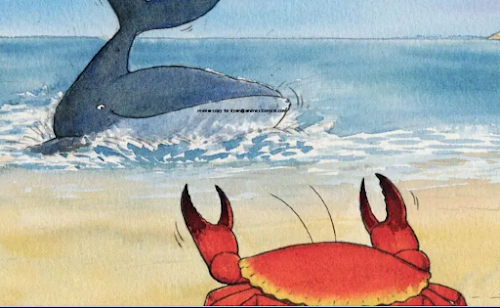
How Mindfulness Can Help Us in Challenging Times
Q+A with Christiane Kerr and Mark Pallis, authors of Crab and Whale, a mindfulness story for children aged 2-8.
"The teacher’s own mindfulness practice is key to effective teaching of it, and helping children strengthen their inner resources through mindfulness is particularly important to building their independence."
There are many more interviews and other resources on mindfulness here at MindfulTeachers.org, including: