A Dozen Thought-Provoking Quotations About Disability
published March 26, 2026
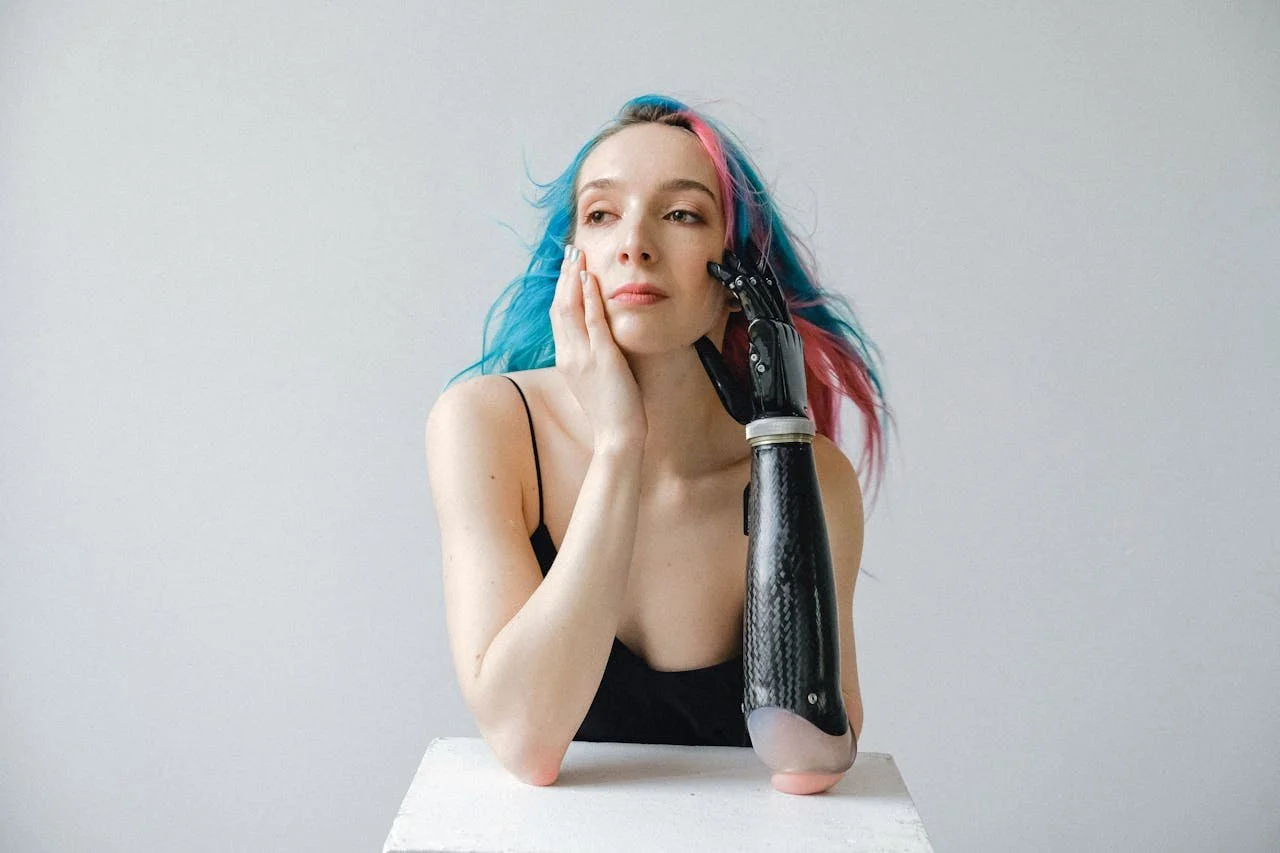
photo by Anna Shvets from Pexels.com
by Catharine Hannay, founder of MindfulTeachers.org
Continuing the series of quotations for teaching mindfulness and compassion, here are a variety of perspectives on the stereotypes vs. reality of people with disabilities.
How We Talk About Disability
1. “The English language is perniciously ableist. We speak in metaphor that constantly puts down disabled bodies, with phrases like ‘turning a blind eye’ and ‘it fell on deaf ears.’ […] People often tell me it’s not that big of a deal. But, of course, if you’ve been listening to your language make you sound stupid, ignorant, and useless for your entire life […] you cannot help but find pain in the ways that language cuts you to the quick.”
Elsa Sjunneson, Being Seen: One DeafBlind Woman’s Fight to End Ableism, p. 42
2. “The word midget, […] drawn from the midge, an annoying small insect, is now considered deeply offensive […] But the general public doesn’t know that midget is an insult, and most people who use the word do so without ill intent.”
Andrew Solomon, Far from the Tree: Parents, Children, and the Search for Identity, p. 126
3. “People ask if they can use words like see, hear, listen, walk, hands, and so on. I’ve had conversations with people with different disabilities. We all say it’s OK to use them and use them ourselves.”
Meryl Evans, “Disability Language and Navigating Its Nuances”
4. “I define disability as a health condition of the body and/or mind that impacts the way a person participates in daily activities. There is no negative value judgment in this definition.”
Tiffany Yu, The Anti-Ableist Manifesto, p. 4
Stereotypes and Unwanted Attention
5. “The things able-bodied people say to disabled people, when they’ve never met us before, like the woman who told me I was so AMAZING and BRAVE for ordering my coffee by myself.”
Elsa Sjunneson, in Disability Visibility: First-Person Stories from the Twenty-First Century, ed. by Alice Wong, p. 138
6. “There is a cliché that dwarfs are often ‘feisty’ […] and myriad articles written under headlines such as ‘Little Person, Big Personality.’ Some of this is just patronizing. Some of it, however, reflects the personality consequences of living as an object of near-universal curiosity. […]
[At a conference for Little People] I began to recognize […] what a relief it had to be for them that no one was focused on their height. Of course, the LPA convention was all about stature, but it was also the place where stature became blessedly irrelevant.”
(Andrew Solomon, Far from the Tree: Parents, Children, and the Search for Identity, p. 123; p. 115-116)
7. “Curiosity may be part of human nature, but please remember that you’re not entitled to information just because someone is disabled, especially if you don’t have any level of familiarity with that person. People with disabilities don’t exist to be, as Autistic activist Jim Sinclair phrased it, ‘self-narrating zoo exhibits.’”
Emily Ladau, Demystifying Disability: What to Know, What to Say, and How to Be an Ally
8. “Indeed, the history of disabled people in the Western world is in part the history of being on display, of being visually conspicuous while being politically and socially erased.”
Professor Rosemarie Garland-Thomson, quoted in Demystifying Disability
Agency and Access
9. “I know my abilities, better than anyone else. I’m the expert when it comes to what I can and can’t do. […]
I like my Deafblind world. It’s comfortable, familiar. It doesn’t feel small or limited. It’s all I’ve ever known; it’s my normal. […]
In a sighted, hearing society […] I’m disabled. They place the burden on me to step out of my world and reach into theirs.”
Haben Girman, Haben: The Deafblind Woman Who Conquered Harvard Law, p.70; p. 12-14
10. “Presume competence.”
Emily Ladau, Demystifying Disability
11. “To boldly go where all others have gone before.”
civil rights banner from the Capitol Crawl, featured at the end of the documentary “Change, Not Charity: The Americans with Disabilities Act”
Final Thought
12: “Disability is the only identity that anyone can suddenly take on at any time.”
Emily Ladau, Demystifying Disability: What to Know, What to Say, and How to Be an Ally
Questions for Reflection and Discussion
As always with personal topics, please respect participants’ choices about how much to share with you or with a group.
Which of these quotations did you most/least identify with? Why?
Do you currently identify as disabled? If not, is it likely you could become disabled in the future? How does this change your perspective on these quotes?
Have you ever used a word that you later found out was considered offensive? How did you feel about this mistake? What can you do to reduce the likelihood of future mistakes?
Has anyone ever stared at you because you look different from them? What happened? How did you feel?
Have you ever caught yourself staring at someone who looks different from you? What happened? How did you feel? How do you think the other person felt?
What is your most comfortable means of communication (ex: writing an email, talking in person, making a phone call, texting, signing, Protactile)?
When did you last try a new way of communicating? What happened? What did you learn from that experience?
Related Posts
There are many more resources here at MindfulTeachers.org about diversity and mindful communication, including the following posts:
Identity, Diversity, and Understanding: Quotations for Reflection and Discussion
Tips for Including Deaf and Hard-of-Hearing Students in Mindfulness, Meditation, and Yoga Classes
Thought-Provoking Videos About Empathy, Compassion, and Service(especially “End the Awkward”)
Videos About Mindful Communication (especially “Words Can Hurt”)