Mindfulness and Meditation: Quotations for Reflection and Discussion
September 2, 2023
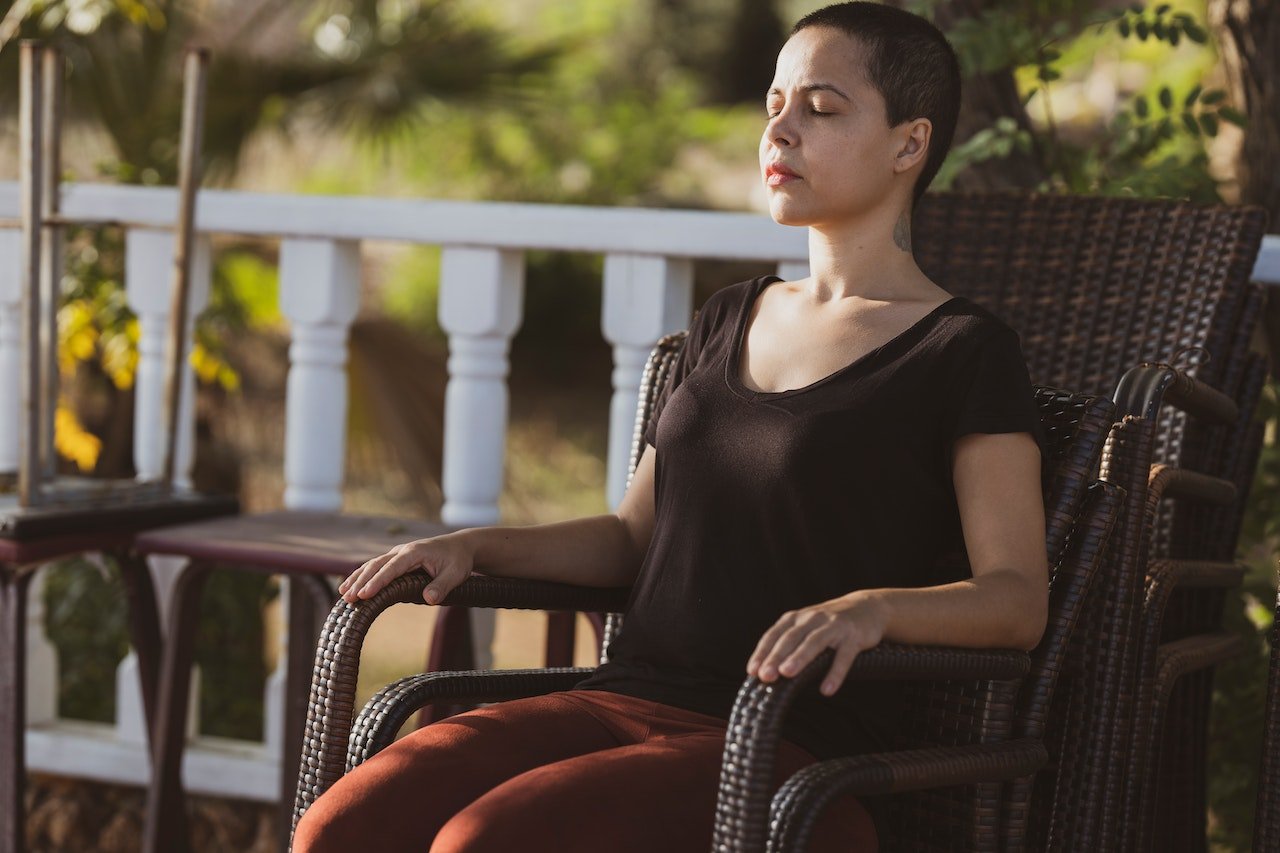
Photo by Engin Akyurt from Pexels
by Catharine Hannay, founder of MindfulTeachers.org
Here are a variety of perspectives on the benefits and challenges of mindfulness and meditation.
Teachers, I don't necessarily recommend giving this whole long list to your students. I like to provide a lot of options so you can choose what's most appropriate for your particular context.
The Power of Awareness
“Mindfulness is a form of awareness and attention that enables us to peer into the truth of this moment.”
Donald Altman, One-Minute Mindfulness
“He could never remember feeling so alive as he did at that moment. There was a skyness to the sky and a nowness to the world that he had never seen or felt or realized before.”
Neil Gaiman and Charles Vess, Stardust, p. 160
“Look at a child, maybe two years old, wide-eyed, full of wonder, amazed by the smallest thing—a yellow butterfly, a smooth rock, a stranger’s smile—or, in an instant, ready to bawl at the world’s pain and injustice. […]
Are you able to see the rock, the butterfly, the smile, as if you were seeing it for the first time? Are you still willing to bawl at all the world’s injustice, to be so open that it actually does hurt?
[…] Embrace the world. That might mean traveling the planet, but it might also mean getting to know every plant, bird, and bug in your small backyard. Be open, always.”
Dinty W. Moore, The Story Cure, p. 130-131; p. 157
“When there is nowhere to go, you realize that most of the time you are racing purposefully from place to place, missing out on how wondrous it all is [...] What you never notice when you’re racing around is the complex, vibrant, breathing reality all around us. We walk right on by, or we sum it up efficiently: Ah, yes, I see it, I know what it is. I’ve seen it before. Very nice. Next!”
Anne Lamott, Dusk, Night, Dawn: On Revival and Courage, p. 163-164
“Mindfulness practice is, at its core, fundamentally all about quieting our minds, opening our hearts, and being as aware as possible in our lives.”
Jennifer Howd, Sit. Walk. Don’t Talk. How I Survived a Silent Meditation Retreat
“I passionately believe that paying attention—Mindfulness—shows itself as goodness and kindness, as concern for others, as concern for the whole world.”
Sylvia Boorstein, Pay Attention for Goodness’ Sake
Challenges to Awareness
“Life is all memory, except for the one present moment that goes by so quick you hardly catch it going.”
Tennessee Williams
“It is easy to get swept away on a strong current of thoughts and feelings. We lose ourselves, and we lose track of what’s actually happening around us. […] Such moments in which we lose our way can do great harm. They make us forgetful and unaware. We are prone to accidents. We can be flooded with feelings of fear and aggression. Many people who have committed acts of violence speak of being lost to themselves in that moment.”
Master Kam Chuen Lam, The Qigong Workbook for Anxiety
“Our natural ability to be fully present is being challenged and is in danger of being lost. Technology’s onslaught of nonstop information is splintering our attention and recalibrating our brains to “future think”—a future-oriented collective mind-set that emphasizes virtual relationships, preoccupation with the future, and activities that disorient and forfeit the present moment.”
Donald Altman, One-Minute Mindfulness
“The Indian philosopher J. Krishnamurti once remarked that observing without evaluating is the highest form of intelligence. When I first read this statement, the thought, ‘What nonsense!’ shot through my mind before I realized that I had just made an evaluation. For most of us, it is difficult to make observations, especially of people and their behavior, that are free of judgment, criticism, or other forms of analysis.”
Marshall Rosenberg, Nonviolent Communication, p. 28
“In any practice there will be tests. That’s why we call it a practice—so we’ll be ready to meet our challenges when the time comes.”
Ann Patchett, These Precious Days, p. 75
“Nobody is just naturally ‘going with the flow’ all the time, and this is perfectly fine. We can take who and how we are right now, and enter the flow at any time.”
SARK, Make Your Creative Dreams Real
“You resolve to stay completely present while, say, washing the dishes […] only to discover that you can’t because you’re too busy self-consciously wondering whether you’re being present enough or not. […] To try to live in the moment implies that you’re somehow separate from ‘the moment,’ and this in a position to either succeed or fail at living in it. […] Living more fully in the present may be simply a matter of realizing that you never had any other option but to be here now.”
Oliver Burkeman, Four Thousand Weeks: Time Management for Mortals, p. 139-140
The Benefits and Challenges of Meditation
“The problem is that perpetually doing, without ever tuning in to the center of our being, is the equivalent of fueling a mighty ship by tossing all its navigational equipment into the furnace.”
Martha Beck, The Joy Diet: 10 Daily Practices for a Happier Life, p. 9
“One of the most powerful benefits of meditation is to be able to access our inner wisdom, which we all have. It speaks very clearly but quietly, and is easily drowned out by the chatter of everyday life. […]
So at the end of a meditation or deep relaxation, when my mind is relatively still and quiet, I ask that inner wisdom, ‘What am I not paying attention to that I need to hear?’
And I listen.”
Dean Ornish and Ann Ornish, Undo It! How Simple Lifestyle Changes Can Reverse Most Chronic Diseases, p. 181
“You can’t just show up and expect to be enlightened, that would be like showing up to the Olympics without ever having trained as an athlete.”
Arthur C. Brooks, From Strength to Strength, p. 151
“When people first begin meditating, or doing contemplative prayer, they experience a measure of relief from the constantly churning mind. They are happy. If their concentration deepens, however, they are often dismayed to find that their mind is like a hyperactive two-year-old, unable to sit still, to stay in the present moment, for more than a few minutes.”
Jan Chozen Bays, How to Train a Wild Elephant, and Other Adventures in Mindfulness, p. 76
“Sometimes it may seem that your mind is more disturbed in meditation than during other times. Usually this is because you’ve never been still or quiet enough to notice [...] your mental radio. [...] Listen to the show as it goes by and enjoy the drama, romance, intrigue, and comedy, but don’t get caught up in any of the scenes, no matter how dramatic. Remain a witness. Use your object of meditation as your anchor.”
Dean Ornish and Ann Ornish, Undo It! How Simple Lifestyle Changes Can Reverse Most Chronic Diseases, p.181
“Meditation is not a contest. Being present with yourself for 5 minutes will be much more helpful than beating yourself for 30. If your choice is between a kind meditation and a long one, choose the kind one. […] Remember that the point is not to succeed or fail, not to be a good person for doing it right or a bad person for doing it wrong, but just to see what happens.”
Cheri Huber, Making a Change for Good: A Guide to Compassionate Self-Discipline, p. 28-29; p. 90
“On the little farm, while Taran and Coll saw to the plowing, sowing, weeding, reaping, and all the other tasks of husbandry, Dallwen undertook the meditating, an occupation so exhausting he could only accomplish it by lying down and closing his eyes.”
Lloyd Alexander, The Book of Three, p. 5
Questions for Reflection and Discussion
(If you choose to use these questions in a class or group: As with any other discussion about personal topics, please respect your students' wishes about how much they choose to share.)
Which of these quotations do you most agree or disagree with? Why?
Have you ever tried to meditate? What kind of meditation did you try? Did you find it challenging? Why or why not?
Do you have a regular mindfulness practice? What do you do, and why did you choose this particular practice?
When do you find it the most/least challenging to be mindful?
Related Posts
There are many more quotations, and other resources for teaching mindfulness, here at MindfulTeachers.org, including the following posts: