

Reflections on My Mindful Teaching Journey
published March 2, 2026
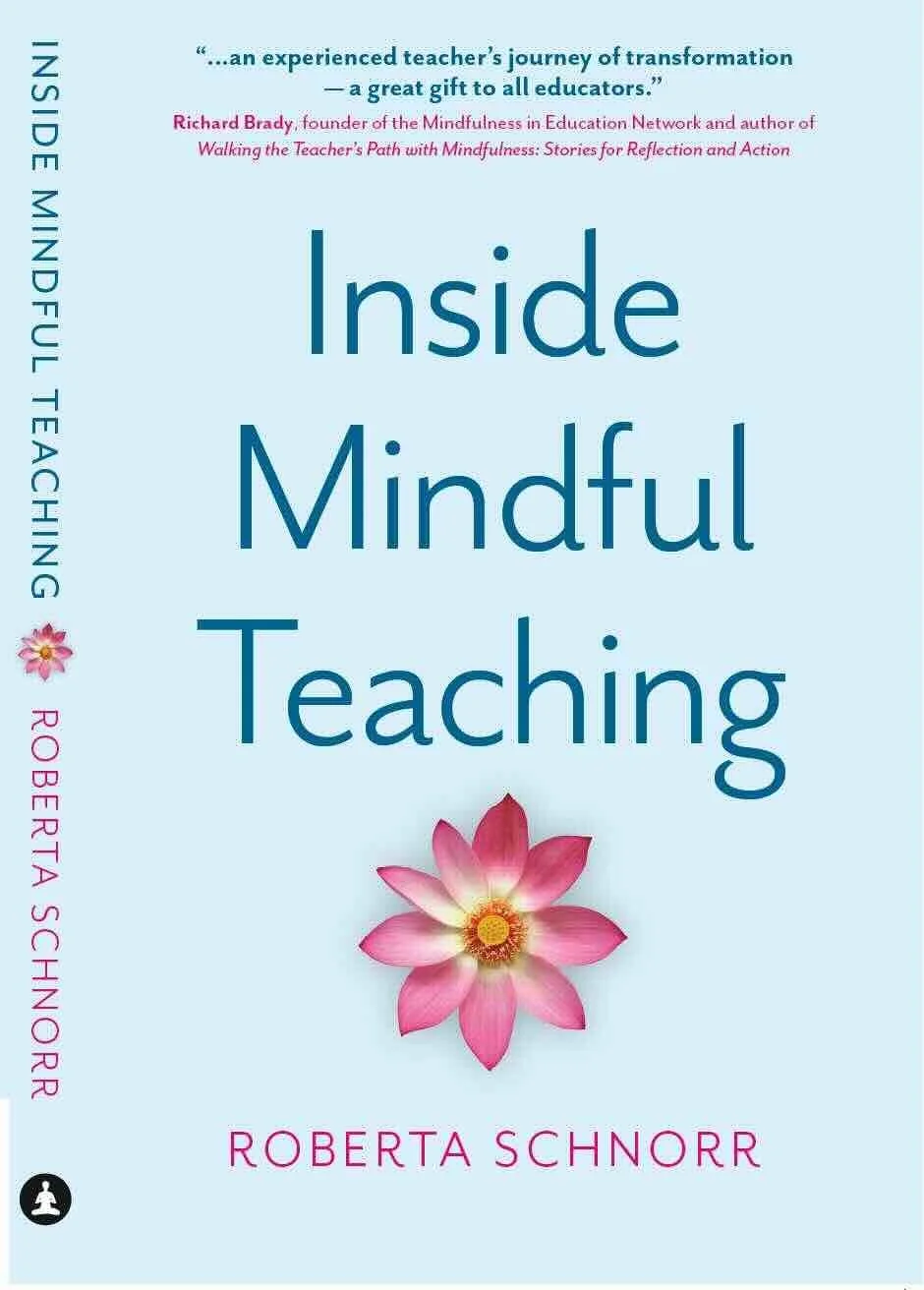
by Roberta Schnorr, from her book Inside Mindful Teaching
My teaching work can be complex, and much of it is dynamic and unscripted. It includes many interactions and decisions through changing conditions. I wondered how I might begin to bring awareness from my foundational practice into the realities of my actual day to day teaching. I was not clear on how to invite this gentle awareness from my quiet personal practice into my teaching. Even as I became a more experienced practitioner, I often struggled to maintain mindfulness in my work.
Insights: Conditions that Support Mindfulness in My Teaching
Cultivating and sustaining a daily mindfulness practice is critical, but not the whole story. It seems that my personal and teaching practice are in an ongoing dance. My daily meditation practice provides stability, at least as a starting point each day. It helps me to integrate basic tools that might be easily accessed during the day to nourish or recover (e.g., breath). Additionally, noticing and remembering and feeling patterns of success and challenge in my teaching life helps me to choose where I might focus my daily practice.
For a long time, my daily practice was to follow my breath to quiet and calm. I am learning that my capacity for mindful teaching benefits from additional practices to support specific kinds of challenges my patterns bump into. For me, this includes my habitual reactivity, which can charge my speech patterns and energy in ways that create anxiety in and disconnection from my students and others.
Similarly, my sometimes-strong attachment to particular outcomes and processes can create a lot of anxiety for me that limits my decisions and interactions. To support my ability to manage (and maybe someday transform) these patterns, it continues to be important for me to focus regularly on practices related to body sensations, strong emotions, and nourishing more wholesome thoughts.
Understanding and Befriending My Nervous System
Though not reported in these explorations, my more recent opportunities to learn more about my zone of resilience, and how to track, nourish, and regulate my nervous system (Rosen, 2023; Ward, n.d.) remain extremely helpful. These understandings help me to recognize and practice with some of my habitual patterns that do not support mindfulness in my teaching and other spheres of my life. The dance between my practice and my teaching experience is ongoing, with each informing and supporting the other.
Cultivating My Intention
Another important lesson for me has been the power of articulating and staying in touch with my intention. Reflecting on my teaching ancestors, and envisioning what shapes my offering, helps to ground me in my best teacher-self. “How do I want to impact my students, now and in the future?” “Who do I want to be as a teacher?” These are questions for decisions large and small; for planning and in the moment.
Even gentle awareness of this element seems to strengthen my consciousness of when I am facing the right direction — the one that aligns with my intention. It also often helps me to recognize when my thinking or actions go astray, so that I can re-orient. For me, intention is a touchstone that supports my ability to pursue my aspiration for my teaching to be a noble offering.
Managing Energies of Power and Vulnerability
One more aspect that I have found to be supportive of my mindfulness in teaching is to try to tune in to my energies of power and vulnerability. When I can be in touch with my vulnerability, as well as my very real strengths, it supports my conditions for mindfulness. Allowing vulnerability for me may take the form of not over-planning for a class or workshop, or scripting what I will say in a meeting with someone. It means letting go of some of my control and trusting my ability to participate as things unfold with “just enough” preparation.
Sometimes, before a big presentation or a challenging meeting, I will meditate to bring myself back to an experience of tenderness with a trusted friend or mentor, or a time when I “got this right.” Often when I do this, my muscles relax, my heart softens, tears may well up. My energy shifts, allowing space for compassion and connection, as well as competence.
I know other individuals whose tendency is to underestimate their capacity and feel anxiety or fear. They report that this impedes their ability to teach with mindfulness. Maybe for these individuals, the opposite is needed: to practice getting in touch with a time when they were indeed powerful and successful and to own and feel their strength.
Embodied Experience of Mindful Teaching
I have tried to find words for many aspects of my journey in search of mindful teaching. One of the great gifts of this exploration for me has been the “felt sense” of mindful teaching that I have experienced in small moments, as well as some longer classes and sessions. My first and most powerful teacher, the one who set me on this path of inquiry, was a 12-year-old boy whom few people even considered to be a capable learner.
Damien has autism, and when we met he had no functional communication system, and often demonstrated challenging behaviors. I met him during a professional consultation. We explored early shared reading and writing activities utilizing some basic technology. His engagement was striking and surprising to his team. It was also powerful and unique for me. The following is an excerpt from my journal, reflecting on my time with Damien, noting my awareness of our unique experience.
But I am also aware of something else. I am really enjoying him. I realize that I am relaxed and in the flow. I am leading, structuring,
facilitating; but also reading him and responding. I am really experimenting, not knowing what he will do with what I present, knowing it’s possible that he may not care, or try, not knowing if he will need help or how much or if I will be able to figure out how to support him. I am subtly aware of these possibilities, but I don’t dwell there. I don’t get anxious or stuck or try to force anything, or direct or control things.
He, I suspect, is coming from a similar place. He does not know me either, or what I have, or what I will share or ask of him. But he is curious, too, and open. He does not resist. He is willing to go there with me, to explore a little bit.
He is mostly responding, but more than once, he definitely initiates, to take the mouse, to drop the mouse and reach for the keys, to sign to me when we finish one sentence and then two, “More … more….” There is some very real energy here, flowing between us in both directions.
I try to remember the last time my teaching felt so authentic, so right.
My time with Damien offered me an embodied experience of mindful teaching and inspired me to cultivate my capacity to be this teacher for “more … more…” of my teaching days.
Excerpt from Inside Mindful Teachingby Roberta Schnorr (2026, Mantra Books)
About the Author
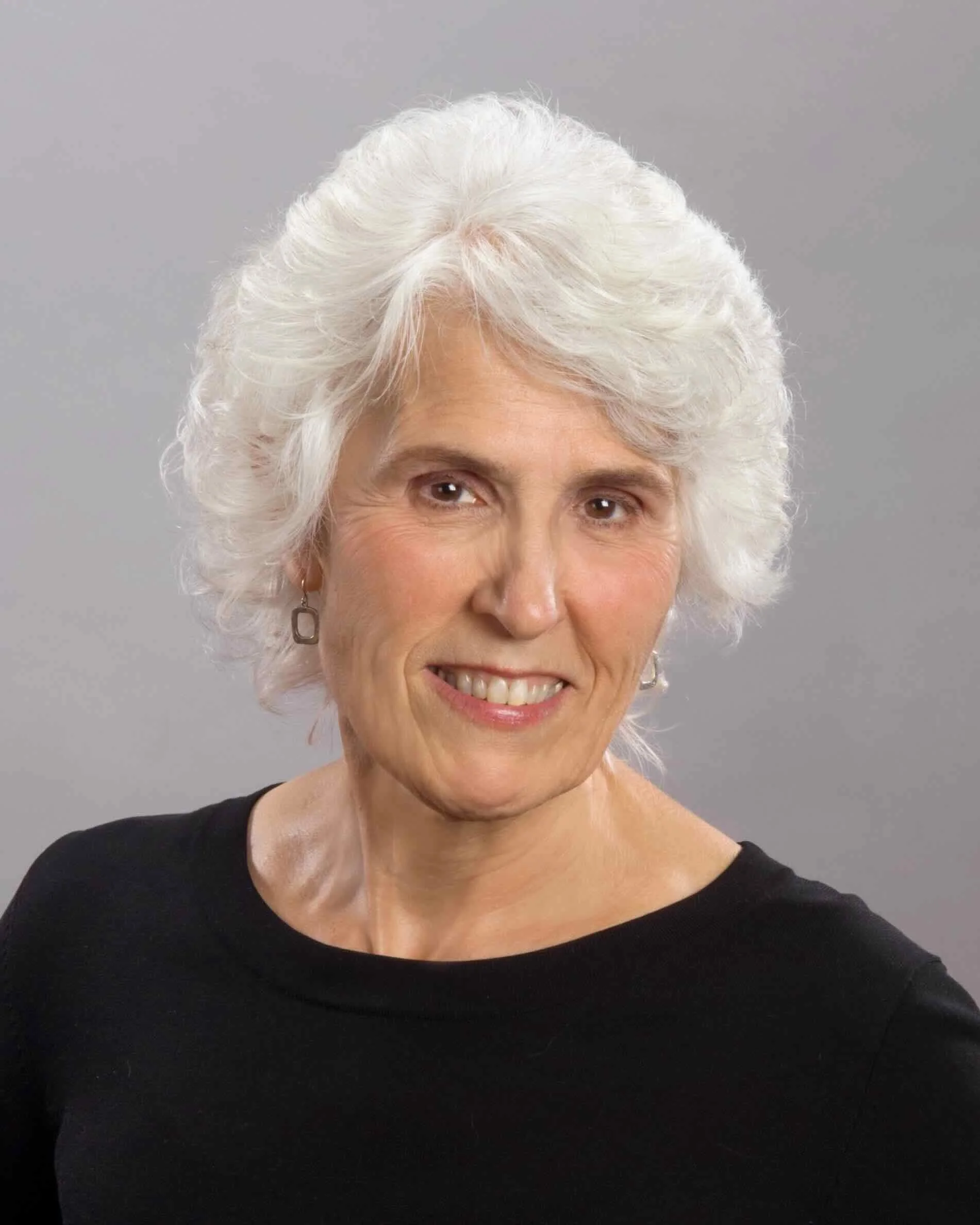
Roberta Schnorr is a retired university professor, teacher educator, advocate and consultant. Her professional career spanned 40 years, including nearly a decade in public schools, and 25+ years directing a graduate program preparing educators.
She has been a mindfulness practitioner since 2008 and co-leader of a local mindfulness group since 2010. Roberta has been an active member of a professional writing group for 21 years, where she regularly writes, reads, and responds to a variety of personal and professional texts. She lives near Syracuse, NY.
Related Posts
There are many more resources here at MindfulTeachers.org on educator self-care and self-awareness, and mindfulness in schools, including the following posts: